
Custom Card Printing Guides
Custom Card Printing Sample vs Proof: Which Should You Order?
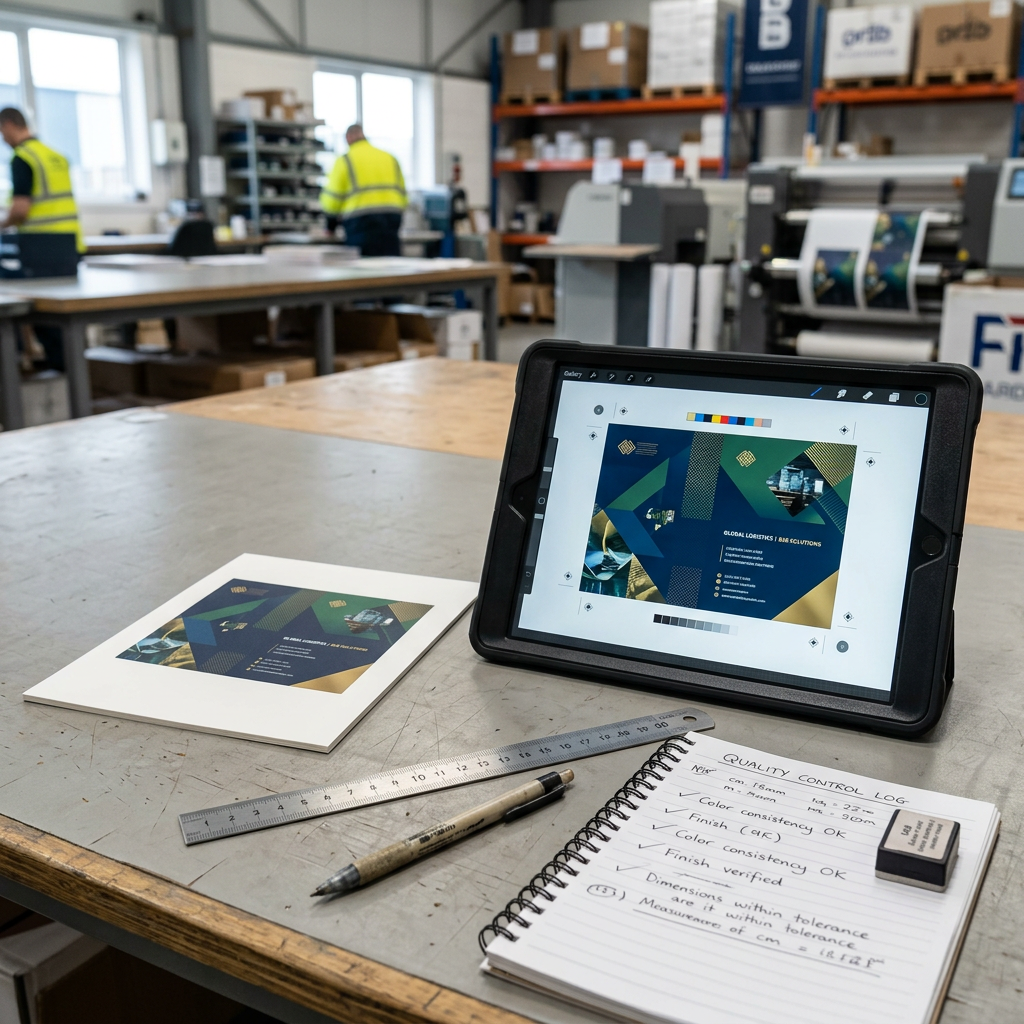
Table of Contents
- Custom Card Printing Sample vs Proof: The Direct Answer
- What Is a Printing Proof?
- What Is a Custom Card Printing Sample?
- Which Option Should You Order?
- What to Check Before Approving Bulk Production
- A Practical Sample and Approval Process
- Conclusion: Choose the Check That Matches Your Risk
A proof confirms artwork and layout, while a custom card printing sample helps evaluate the physical result. This guide explains when B2B buyers should order each option, what they can verify, and how sampling affects bulk production decisions.
Custom Card Printing Sample vs Proof: The Direct Answer
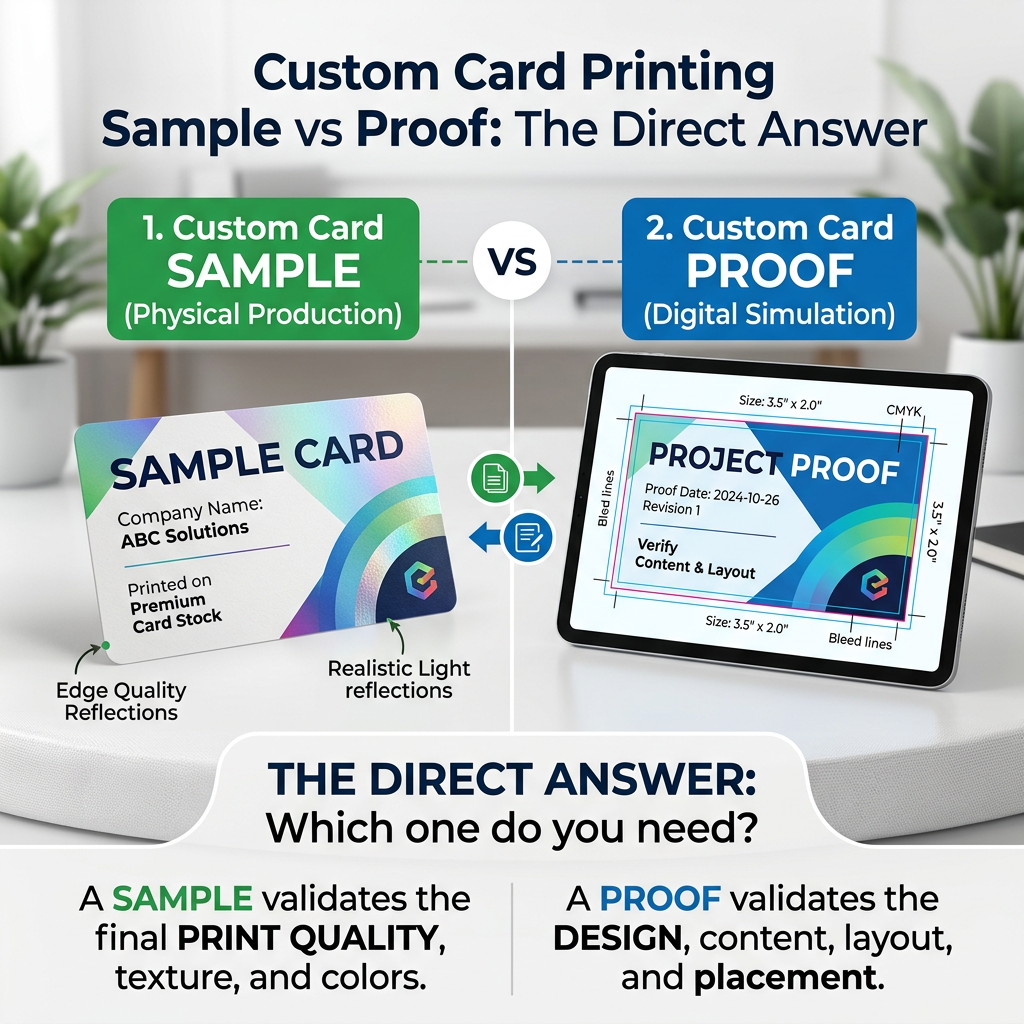
If you need to confirm artwork, a digital proof may be enough. If you need to evaluate the physical card before committing to bulk production, order a custom card printing sample. Many B2B buyers use both: approve the proof first, then review a physical sample when material, finish, color, assembly, or packaging could affect the final result.
A proof is primarily an artwork and layout check. A sample is a physical production reference. They solve different problems, and choosing between them depends on the complexity, quantity, budget, and risk of your project.
For straightforward cards with finalized specifications, a digital proof can help prevent layout mistakes. For playing cards, premium game cards, membership cards, retail decks, or products with special finishes, a physical sample gives more useful evidence before bulk manufacturing.
What Is a Printing Proof?
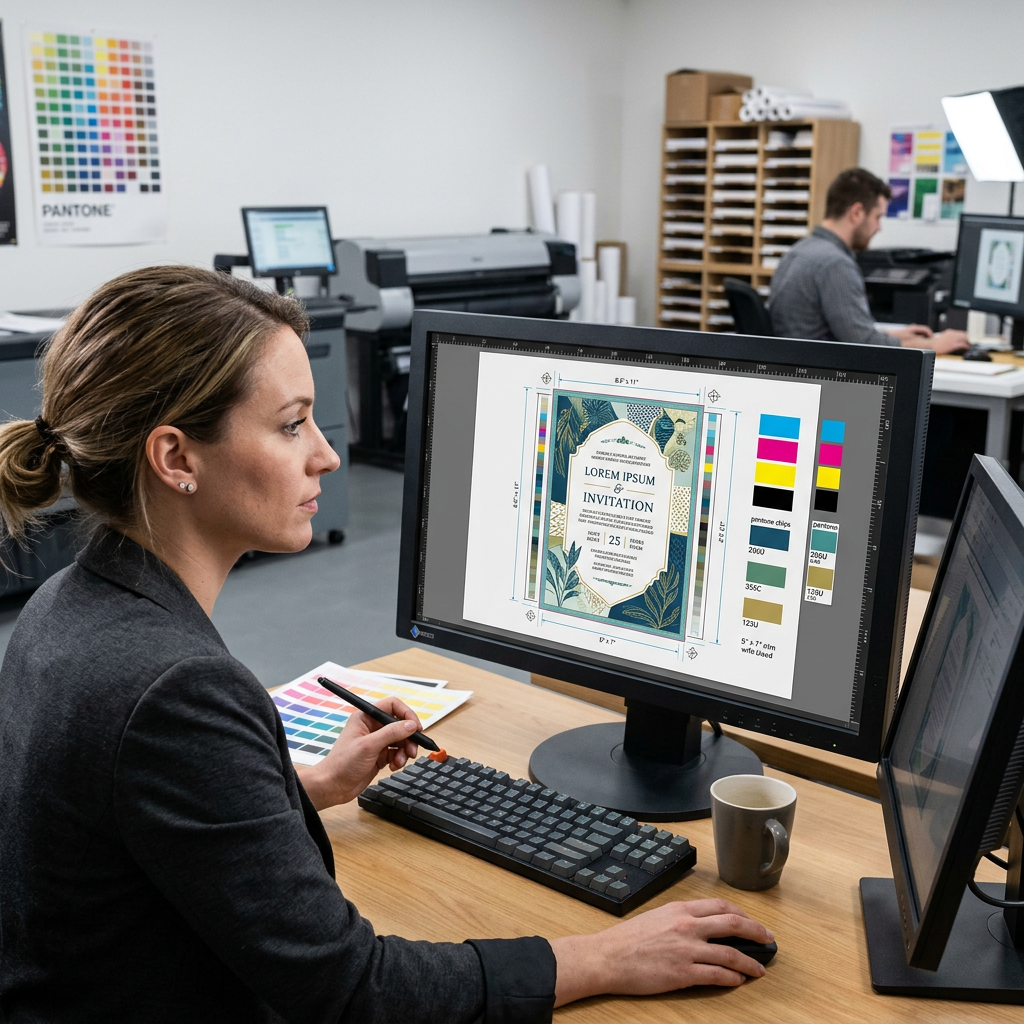
A printing proof is a preview used to verify the artwork before production. It may be a digital PDF, screen preview, or another approval file. Depending on the supplier and project, a proof can show the placement of text, images, logos, borders, bleed, cut lines, card fronts, card backs, and the order of files.
A proof is useful because it can identify:
- Incorrect text, spelling, or language versions
- Missing artwork or incorrect file versions
- Misaligned borders, icons, and design elements
- Incorrect dimensions, bleed, or orientation
- Differences between the approved front and back designs
However, a digital proof does not fully represent the physical product. Screen brightness, monitor calibration, paper surface, ink absorption, coating, and lighting can all influence how color and contrast appear. A proof also cannot reliably confirm card stiffness, shuffle feel, surface texture, edge quality, box fit, or packaging durability.
For this reason, proof approval should be treated as approval of the artwork and layout—not as complete approval of the physical product.
What Is a Custom Card Printing Sample?
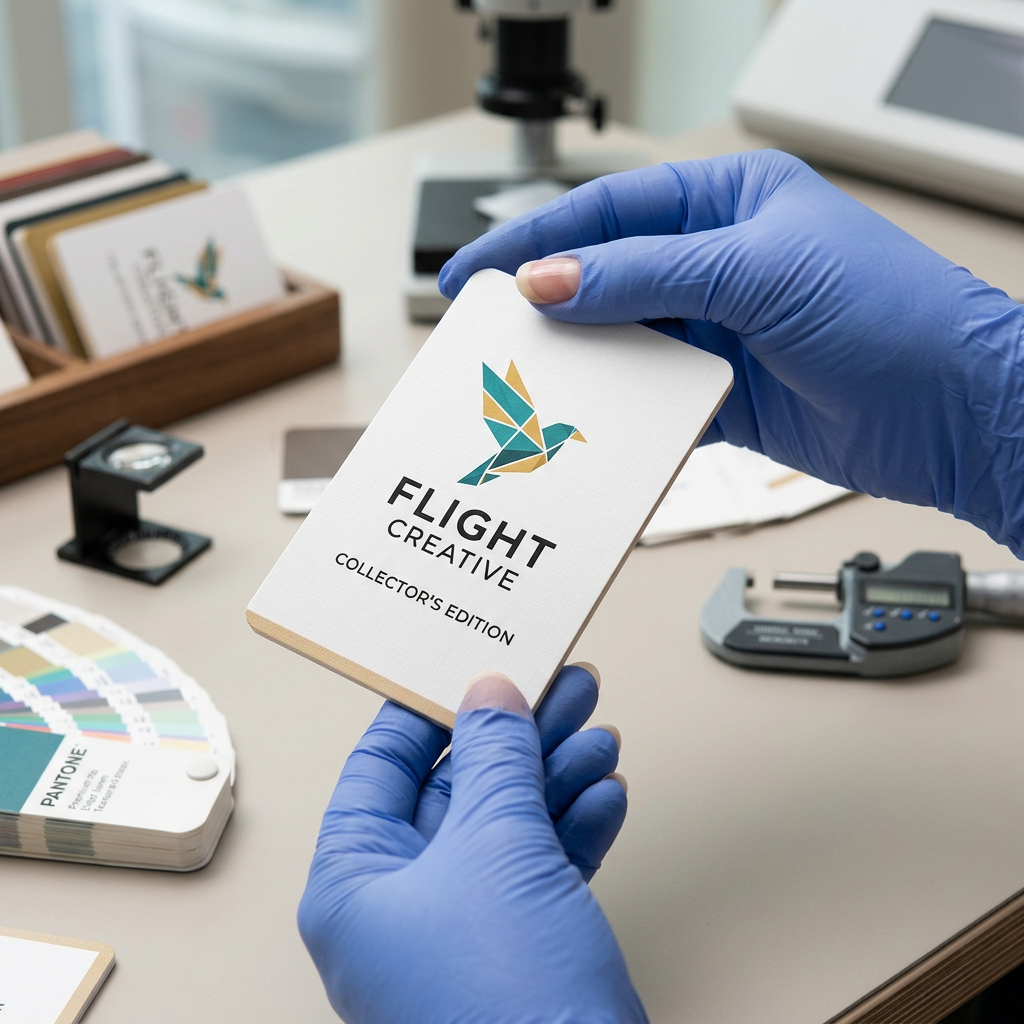
A custom card printing sample is a physical card, deck, box, or assembled product made to represent the proposed production specification. It may be produced using the intended card stock, dimensions, print method, finish, collation, and packaging approach. The exact sampling method should be confirmed with the manufacturer because a sample can be made through different processes depending on quantity and complexity.
A physical sample helps buyers assess characteristics that a proof cannot show clearly:
- Card stock thickness, stiffness, opacity, and general handling feel
- Color appearance under normal viewing conditions
- Surface finish, coating, lamination, foil, or other tactile effects
- Cutting accuracy, rounded corners, registration, and edge quality
- Front-to-back alignment and consistency across cards
- Deck collation, wrapping, tuck box fit, and export packaging
Sampling may not perfectly duplicate the final bulk run. Production equipment, materials, setup methods, and sample quantities can differ. Ask the factory which specifications are identical to bulk production and which elements are representative only. This distinction is especially important for color-sensitive designs, complex card sets, and products requiring multiple finishing steps.
Which Option Should You Order?
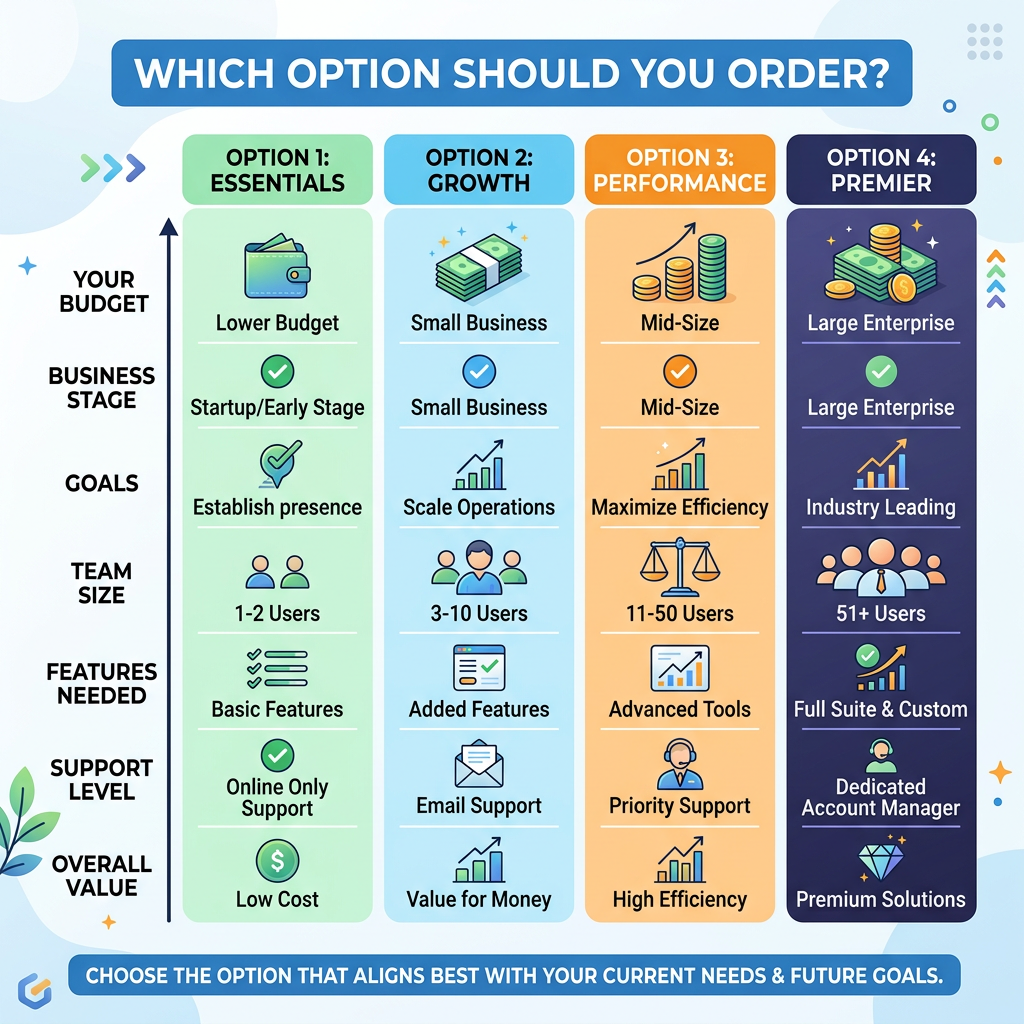
The right choice depends on the main uncertainty in your project. Order a proof when the priority is artwork approval and the physical specification is already established. Order a physical sample when the buyer, distributor, or internal team must evaluate how the finished card looks and feels.
Choose a proof when:
- The design is still being checked for text, layout, and file accuracy.
- The card uses a standard material and finish already approved for a previous order.
- The project has a relatively low physical risk and the specifications are clear.
- You need to approve multiple design versions efficiently before sampling.
Choose a physical sample when:
- The card stock, thickness, coating, or finish is new to your team.
- Color, tactile feel, stiffness, or shuffle performance matters commercially.
- The product includes custom boxes, seals, inserts, or other assembled packaging.
- The order is large, difficult to replace, or subject to customer or retailer approval.
- Several suppliers are being compared on physical quality rather than price alone.
When the project is high value or technically complex, the safest sequence is usually proof approval followed by a physical sample. The proof reduces artwork errors; the sample reduces specification and workmanship risks.
What to Check Before Approving Bulk Production
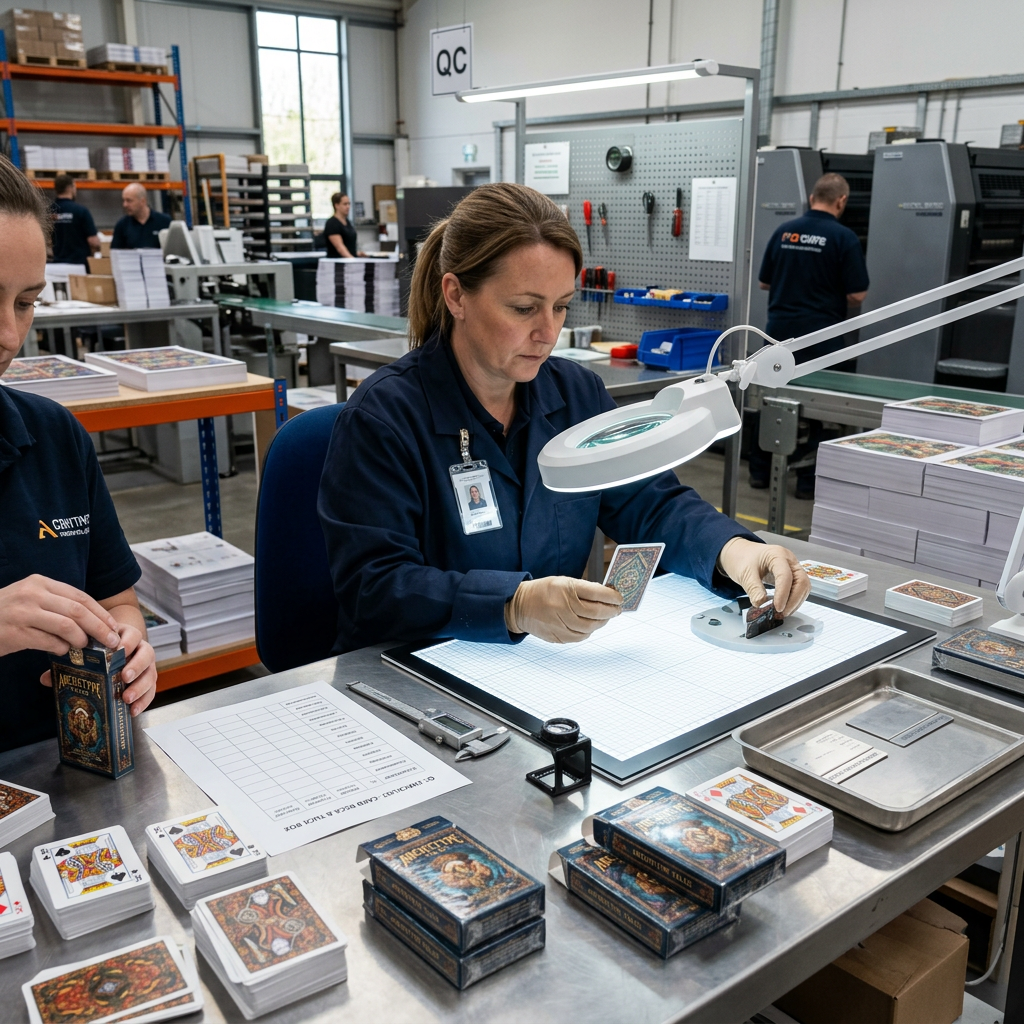
Use the sample as a structured approval tool rather than judging it only by appearance. Record comments and separate acceptable variation from changes that require correction.
Artwork and print
- Confirm every card face, back, instruction card, and insert against the approved files.
- Check color appearance under consistent lighting and compare with any agreed reference.
- Inspect small text, fine lines, gradients, borders, and image detail.
- Look for registration issues, unwanted marks, uneven coverage, or visible scratches.
Material and finishing
- Check the card thickness, stiffness, opacity, and surface feel.
- Confirm whether the finish is matte, gloss, textured, laminated, or otherwise specified.
- Inspect corners, cutting, edges, and the relationship between front and back surfaces.
Assembly and packaging
- Count cards and verify the intended sequence or collation.
- Test whether the deck fits the box correctly and whether inserts remain secure.
- Review shrink wrapping, labels, cartons, separators, and protection for export shipping.
Document approvals in writing. If changes are requested, ask for an updated proof or revised sample before bulk production. Specifications, MOQ, price, and lead time depend on the card type, size, materials, quantity, finishes, packaging, and quality requirements.
A Practical Sample and Approval Process
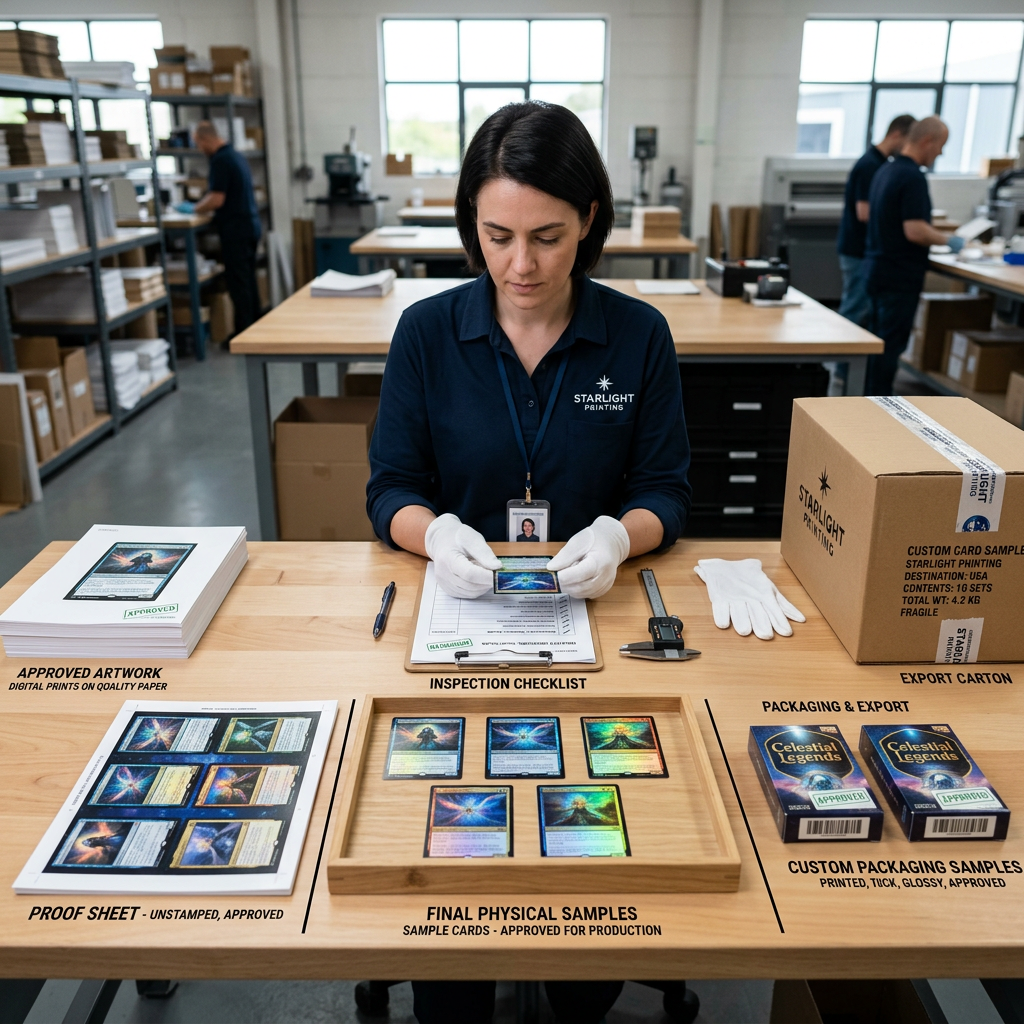
- Confirm the specification. Share the card type, finished size, number of cards or designs, material, thickness, printing requirements, finishes, packaging, quantity, and destination.
- Review the artwork. Check file dimensions, bleed, safe areas, color mode, image resolution, and version control. Request a proof before physical sampling where appropriate.
- Define the sample scope. Confirm whether the sample includes one card, a complete deck, a box, inserts, wrapping, or export packaging. Ask which elements will match bulk production.
- Inspect the physical sample. Use a written checklist covering print, material, finish, cutting, collation, assembly, and packaging.
- Send consolidated feedback. Combine comments from design, purchasing, quality, and marketing teams to avoid conflicting instructions.
- Approve or revise. Give written approval only after the required changes are resolved. Keep the approved files and sample notes with the purchase documentation.
- Confirm bulk controls. Ask how the approved specification will be transferred to production and checked during manufacturing and packing.
A manufacturer with artwork review, sampling, bulk production, quality checks, export packing, and worldwide shipping support can help coordinate these stages. Even so, buyers should retain responsibility for confirming the commercial and technical requirements before approval.
Conclusion: Choose the Check That Matches Your Risk
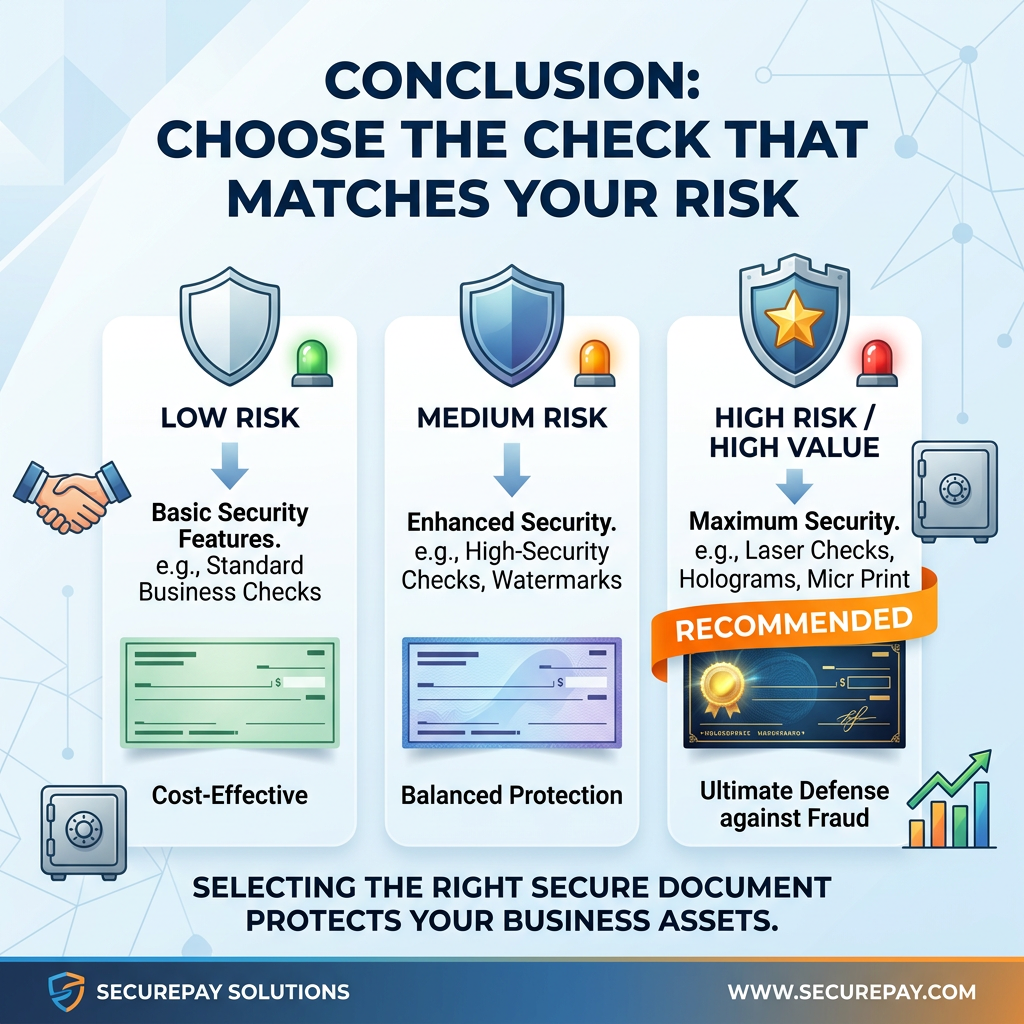
A proof is the efficient choice for checking artwork and layout. A custom card printing sample is the more informative choice when physical quality, material selection, finishing, assembly, or packaging could affect the commercial result. For many B2B projects, using both provides the clearest approval path: proof first, sample second, and written approval before bulk production.
The best sampling plan depends on your card type, specifications, MOQ, price target, finish, packaging, and destination. Treat sampling as risk control rather than an optional extra, especially when replacing a defective bulk order would be costly or time-consuming.
FAQs
Is a digital proof the same as a physical card sample?
No. A digital proof mainly checks artwork, text, layout, dimensions, and file placement. A physical card sample helps evaluate material, color appearance, stiffness, surface finish, cutting, assembly, and packaging.
Should I order a sample before placing a bulk card printing order?
For complex, high-quantity, color-sensitive, or premium card projects, a physical sample is often a prudent step. For simpler repeat orders with an established specification, a proof may be sufficient, subject to the buyer’s risk tolerance and approval process.
Will the custom card printing sample exactly match the bulk order?
Not necessarily. The result depends on the sampling method, equipment, materials, and quantity. Ask the manufacturer which elements use the intended bulk-production materials and processes, and document any acceptable variation before approval.
What information should I provide when requesting a card sample?
Provide the card type, finished size, quantity or deck structure, material, thickness, artwork, finish, packaging, destination, and any color or handling expectations. Also explain whether you need an individual card, complete deck, box, assembled set, or packaging sample.
Do sampling fees, MOQ, price, and lead time stay the same for every project?
No. Sampling fees, MOQ, price, and lead time depend on project requirements, including card dimensions, materials, number of designs, finishing steps, packaging, sample quantity, and production method. Request a project-specific quotation.
Discuss Your Card Sample Requirements
YBJ Cards Printing can review your artwork and help determine whether you need a proof, a physical sample, or both. Share your card type, size, material, quantity, finish, and packaging requirements for a tailored recommendation and quote.
Tags
Keep Reading
Related Articles
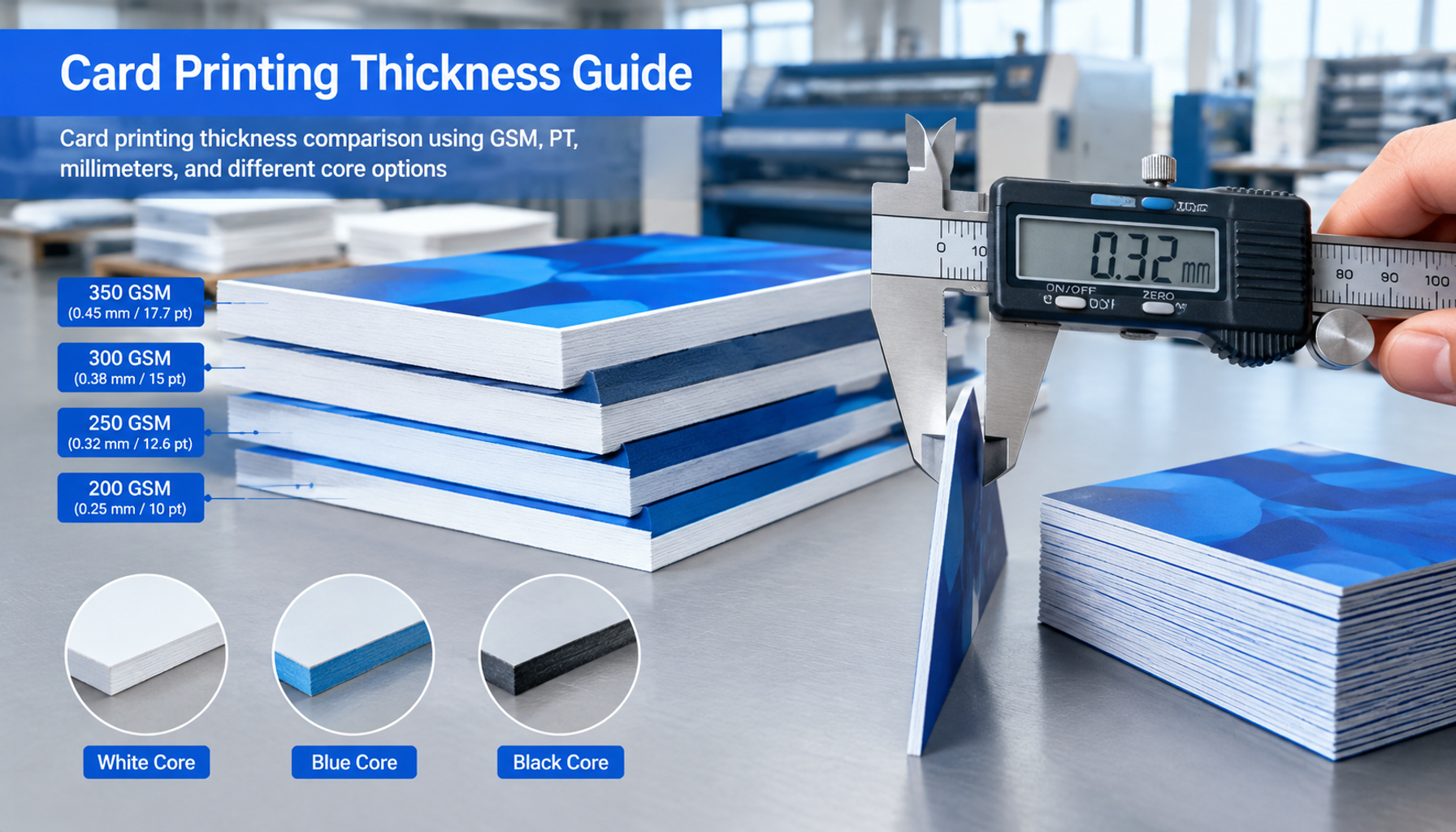
Card Printing Thickness: GSM, PT, and Core Selection Guide
A practical B2B guide to comparing GSM, PT, millimeters, paperboard cores, and plastic constructions when specifying custom cards.
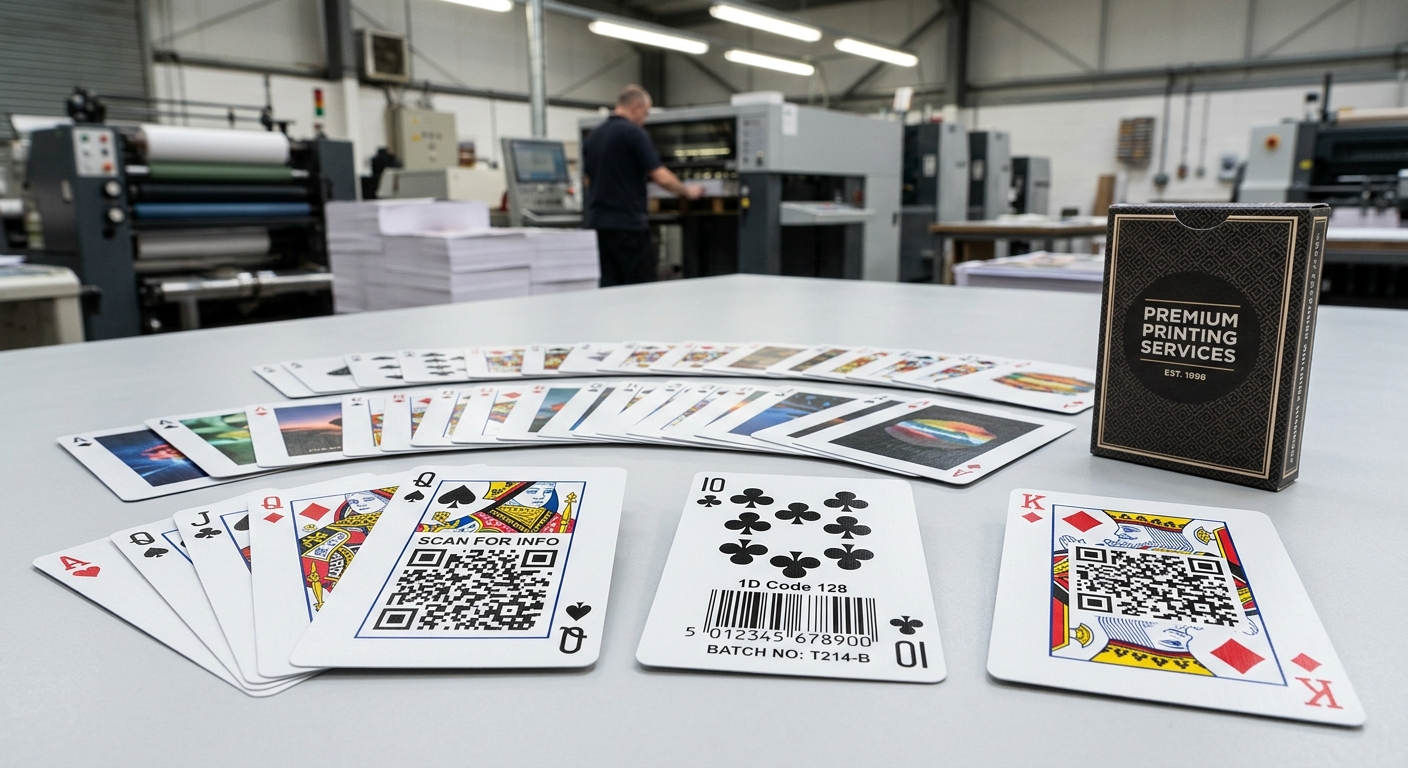
How to Print Custom Cards with QR Codes and Barcodes in a Deck
Printing scannable codes on a custom card deck requires coordination between code generation, database management, artwork preparation, print production, finishing, and scan testing. This practical guide explains how B2B buyers can prepare reliable QR codes and barcodes for static or variable-data card decks.
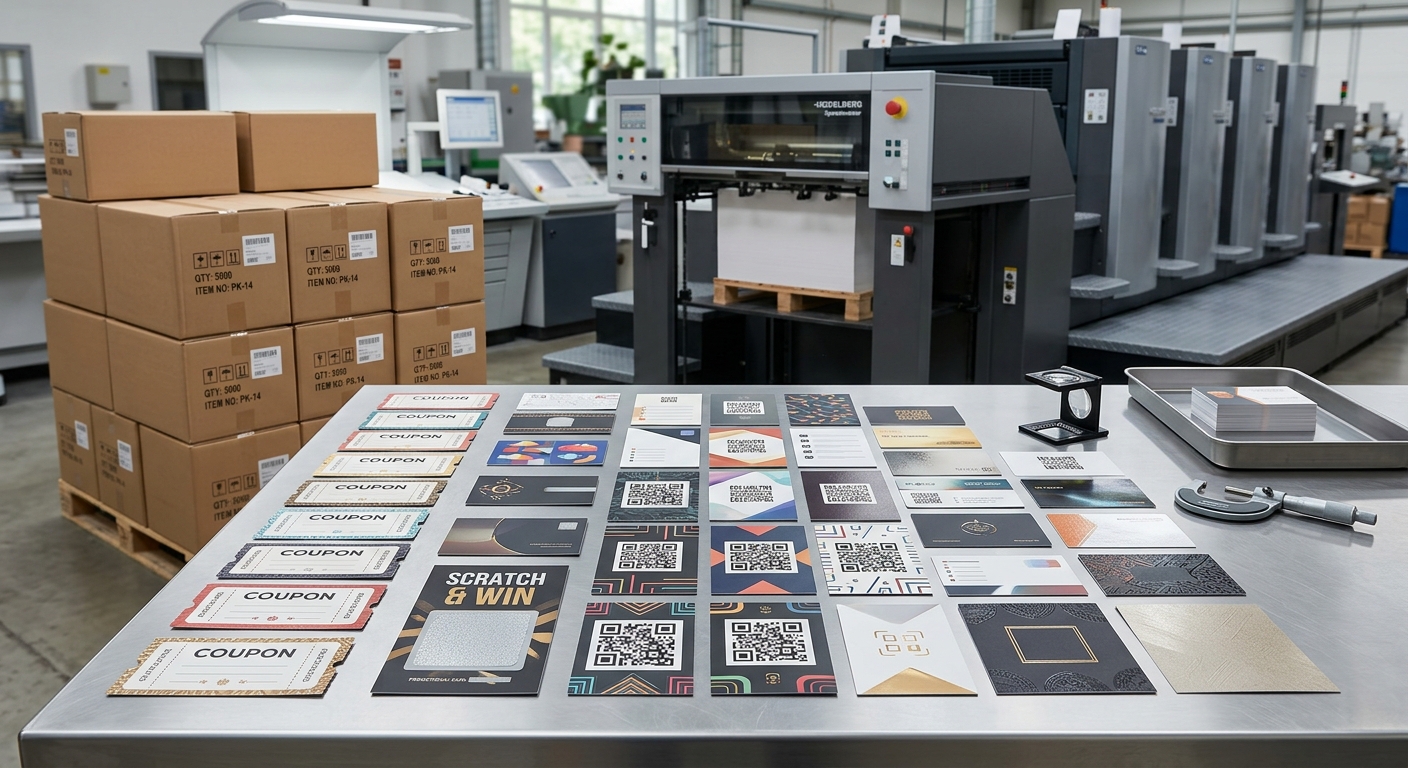
Custom Promotional Card Printing for Marketing Campaigns: Formats and Production Tips
Custom promotional card printing helps brands deliver compact, measurable marketing materials for launches, retail promotions, events, loyalty programs, and direct-mail campaigns. The best result depends on matching the card format, material, finish, artwork, quantity, and packaging to the campaign objective.
Fast Quote Support
Ready to Start Your Custom Card Project?
Send us your product type, size, material, quantity, and packaging requirements. Our team will reply within 24 hours with production suggestions, sampling options, and a competitive quote. No setup fees.