
Card Game Manufacturing
How to Manufacture a Card Game: From Prototype to Bulk Order
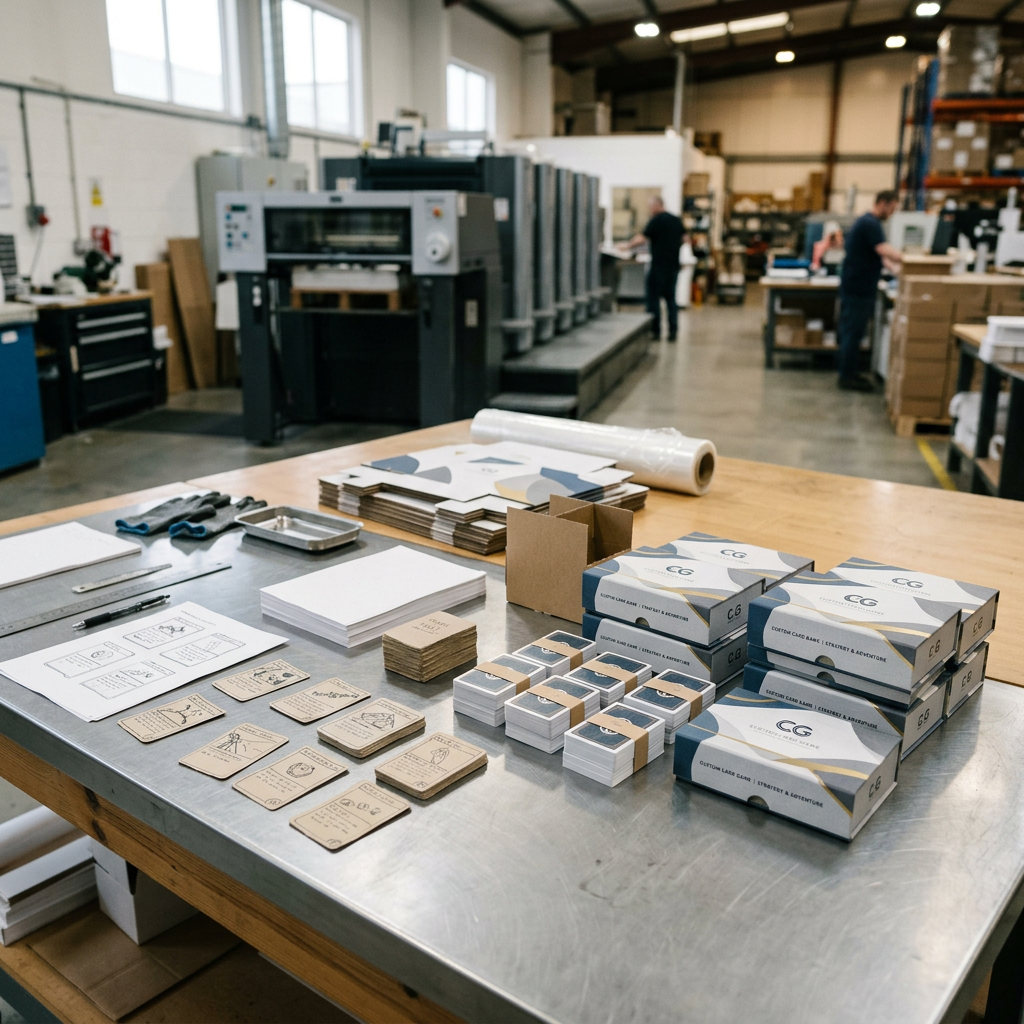
Table of Contents
- How to Manufacture a Card Game: The Complete Production Path
- Develop and Test the Card Game Prototype
- Define the Manufacturing Specifications
- Request a Clear Quotation and Production Plan
- Approve Artwork, Prepress, and Physical Samples
- Manage Bulk Production and Quality Control
- Prepare Packaging and International Shipping
- Conclusion: Build a Repeatable Card Game Supply Chain
Learn how to manufacture a card game by moving through concept development, prototype testing, technical specifications, sampling, bulk production, quality control, packaging, and international shipping.
How to Manufacture a Card Game: The Complete Production Path
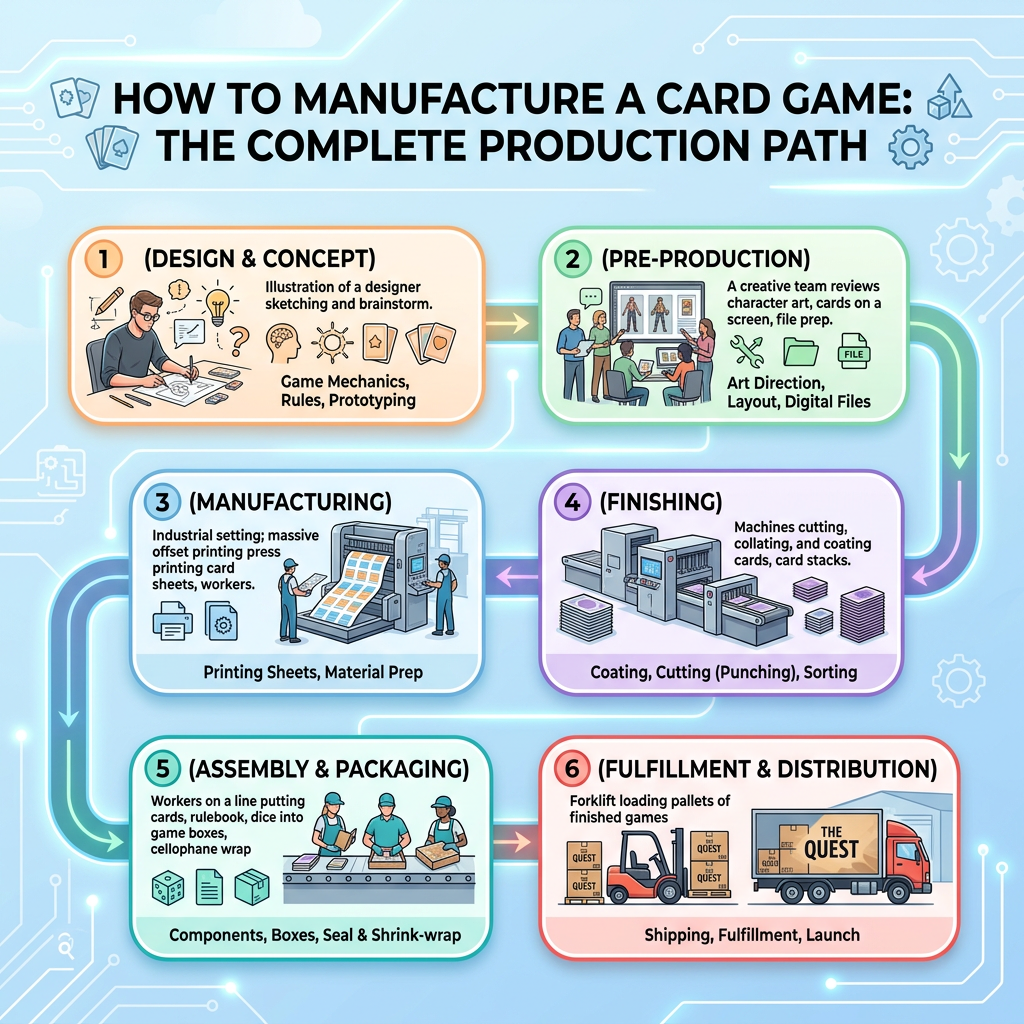
To manufacture a card game successfully, convert the game concept into a tested prototype, confirm measurable product specifications, approve production samples, and then release the project for controlled bulk manufacturing. The process is not limited to printing the card faces. It also includes file preparation, card stock selection, surface finishing, cutting, collation, packaging, inspection, and export shipping.
For B2B buyers, the most reliable workflow is to involve a manufacturer before the artwork is finalized. Early technical review can identify problems such as insufficient bleed, unreadable small text, inconsistent card backs, unsuitable packaging dimensions, or a box that cannot hold the complete set.
Specifications, minimum order quantity, price, and lead time depend on the card format, number of cards, materials, finishes, packaging, order quantity, and shipping requirements.
- Develop and playtest the prototype.
- Define the card, packaging, and shipment specifications.
- Request a quotation and confirm the production scope.
- Prepare artwork and approve prepress proofs.
- Review a physical sample before bulk production.
- Monitor printing, finishing, cutting, collation, and quality control.
- Approve export packaging and arrange shipment.
Develop and Test the Card Game Prototype
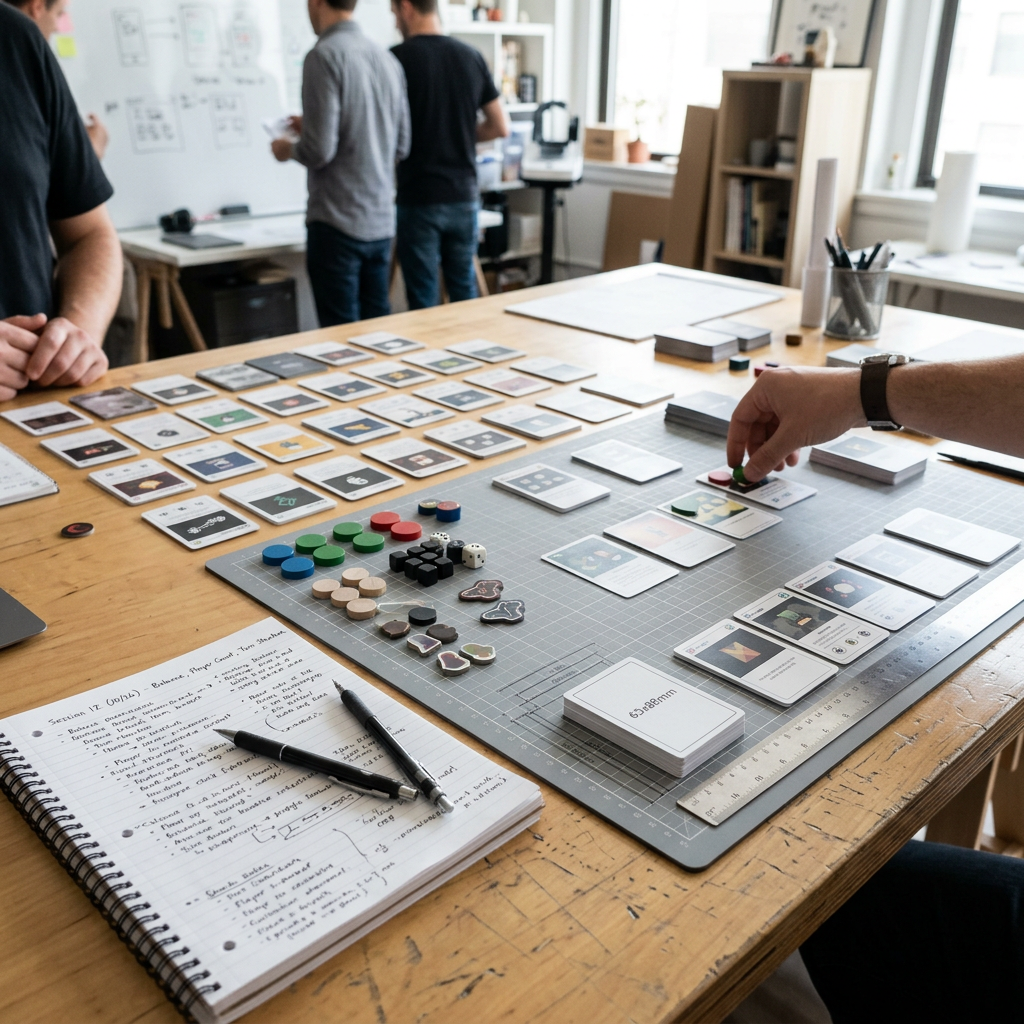
A prototype is a working version used to test rules, card counts, artwork placement, and the physical handling of the game. It does not need to use final materials, but it should represent the intended card dimensions and approximate thickness closely enough for meaningful playtesting.
Confirm the game before requesting final production
Playtest with different groups and record changes rather than relying on memory. Check whether players can distinguish card categories, read the text under normal lighting, shuffle the deck comfortably, and understand the sequence of play. Also verify the complete card list, duplicate quantities, language versions, and any special cards.
At this stage, identify whether the product is a single deck, multiple decks, or a complete game set containing cards and accessories. A manufacturer may need separate files, packaging compartments, or collation instructions for each component.
Use a controlled version system for artwork. For example, label files by game name, language, card category, revision date, and approval status. This reduces the risk of an outdated rule card or an earlier illustration entering production.
Define the Card Game Manufacturing Specifications
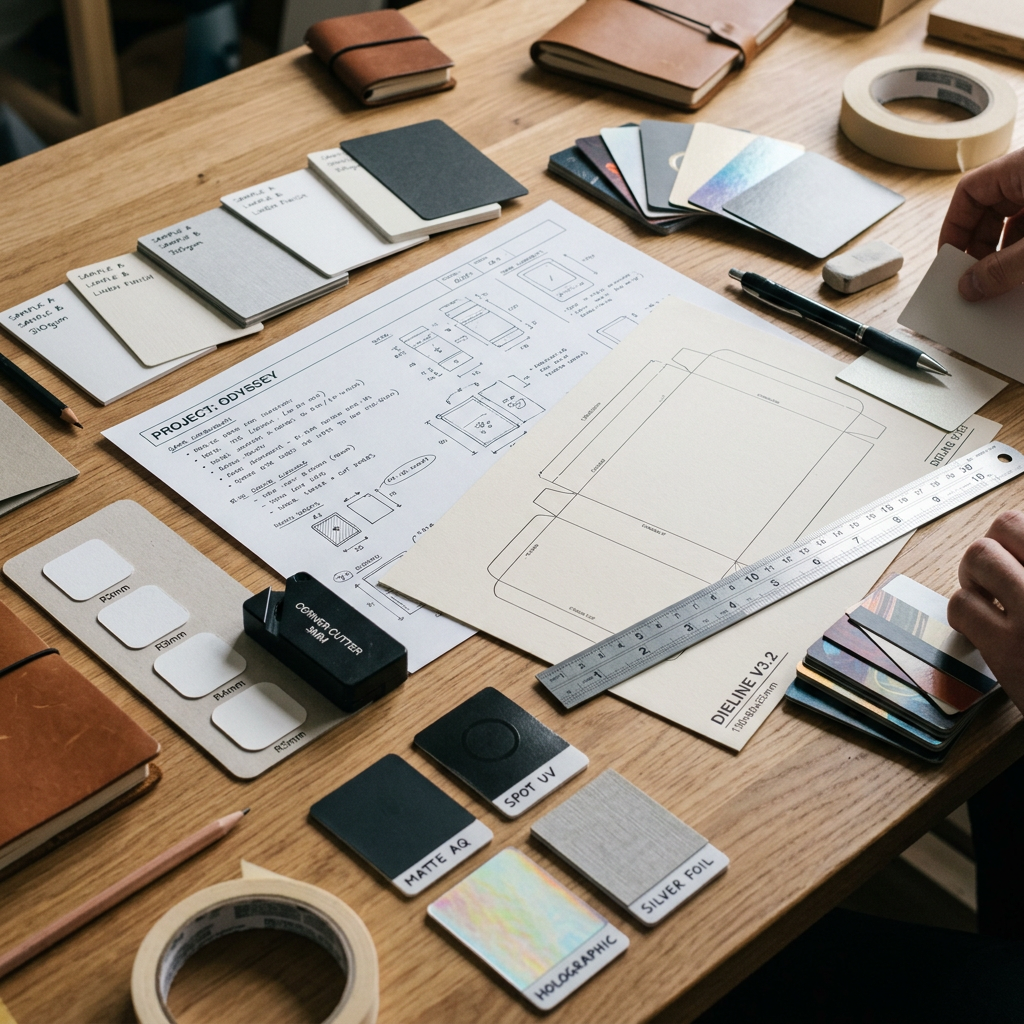
Technical specifications are measurable product requirements that allow a factory to calculate materials, production steps, packaging space, and quality standards. A complete specification sheet should cover the following points.
Cards
- Finished size: State the width and height of one finished card, preferably in millimeters.
- Card count: List the total cards per deck or game, including duplicates and instruction cards.
- Card stock: Choose the intended paperboard or playing-card stock based on stiffness, flexibility, opacity, and handling.
- Printing: Confirm one-sided or two-sided printing, color requirements, and whether different card faces are included.
- Corner treatment: Specify square or rounded corners and the approximate corner radius when relevant.
- Finish: Define whether the cards require a smooth, matte, gloss, or other suitable surface treatment.
Packaging
- Specify tuck box, rigid box, drawer box, paper band, shrink wrap, or another structure.
- Confirm whether the game includes dividers, tokens, rule sheets, or other inserts.
- State barcode, warning, language, and regulatory artwork requirements where applicable to the destination market.
- Confirm the number of finished games per carton and the desired carton labeling.
Material and finish decisions affect appearance, durability, handling, and cost. A heavier stock may feel more substantial but can increase deck thickness and packaging dimensions. A protective finish may improve surface resistance, while a different finish can change friction and shuffling behavior. Review these trade-offs with the factory before approval.
For a detailed discussion of stock, finishes, and packaging choices, see the custom playing card printing materials, finishes, and packaging guide.
Request a Clear Quotation and Production Plan

When requesting a quotation, provide enough information for the manufacturer to price the same product you intend to order. A request based only on “custom card game” may produce an estimate that changes substantially after the card count, stock, box, or finish is confirmed.
Send a concise project brief containing:
- Game name and intended use
- Finished card size and total card count
- Card stock and finish preference, if known
- Number of unique faces and duplicate cards
- Packaging type and included components
- Prototype or sampling requirements
- Estimated order quantity and possible repeat-order volume
- Destination country and shipping preference
Ask the supplier to separate tooling or setup items, sampling charges, unit production, packaging, export packing, and shipping where applicable. Confirm what is included in the quotation and whether artwork review is part of the prepress process.
MOQ means minimum order quantity: the smallest quantity a manufacturer is prepared to produce under a particular setup. It can depend on the product structure, printing process, packaging, and material purchasing requirements. Do not assume that a prototype quantity and a bulk-order MOQ are the same.
Approve Artwork, Prepress, and Physical Samples
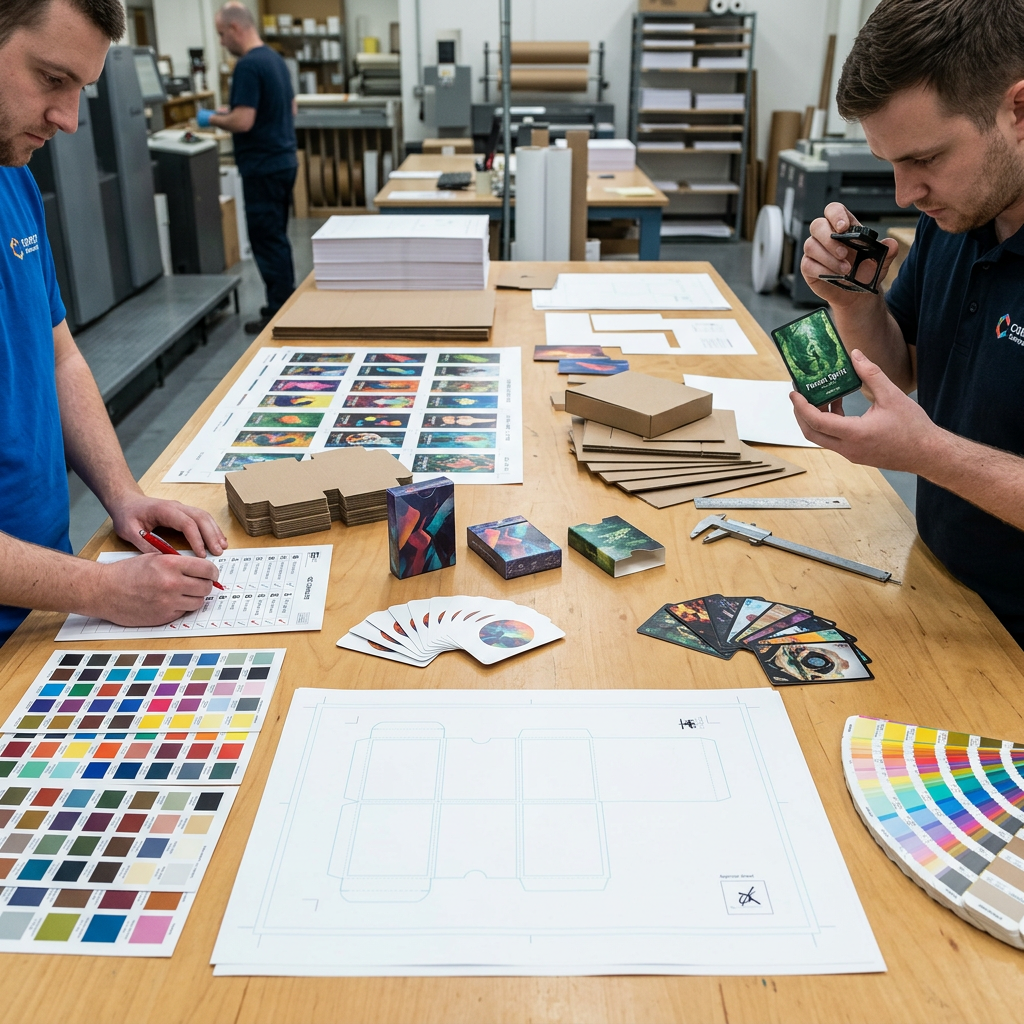
Prepress is the preparation and technical inspection of artwork before printing. The factory should review file dimensions, bleed, safe areas, color setup, image resolution, fonts, barcodes, and card-back alignment. A prepress check can identify file risks, but it does not replace buyer approval of content and color expectations.
Artwork approval checklist
- Use the manufacturer’s current dielines and templates.
- Extend background artwork beyond the cut line to provide bleed.
- Keep essential text and symbols inside the safe area.
- Check that card backs are centered and consistent.
- Confirm spelling, rules, icons, numbering, and language versions.
- Supply linked images and editable files when requested.
- Mark each approved file clearly and archive the final version.
A digital proof helps confirm layout and content. A physical sample is more useful for evaluating card thickness, opacity, finish, corner shape, box fit, and the practical assembly of the complete set. If color is commercially important, discuss how the sample and production run will be evaluated, because screen displays and printed materials do not appear identical.
Keep a written sample approval record. It should state the approved card size, material, finish, packaging, artwork revision, and any permitted production tolerances. Changes made after approval may require a new sample and can affect the schedule.
Manage Bulk Production and Quality Control
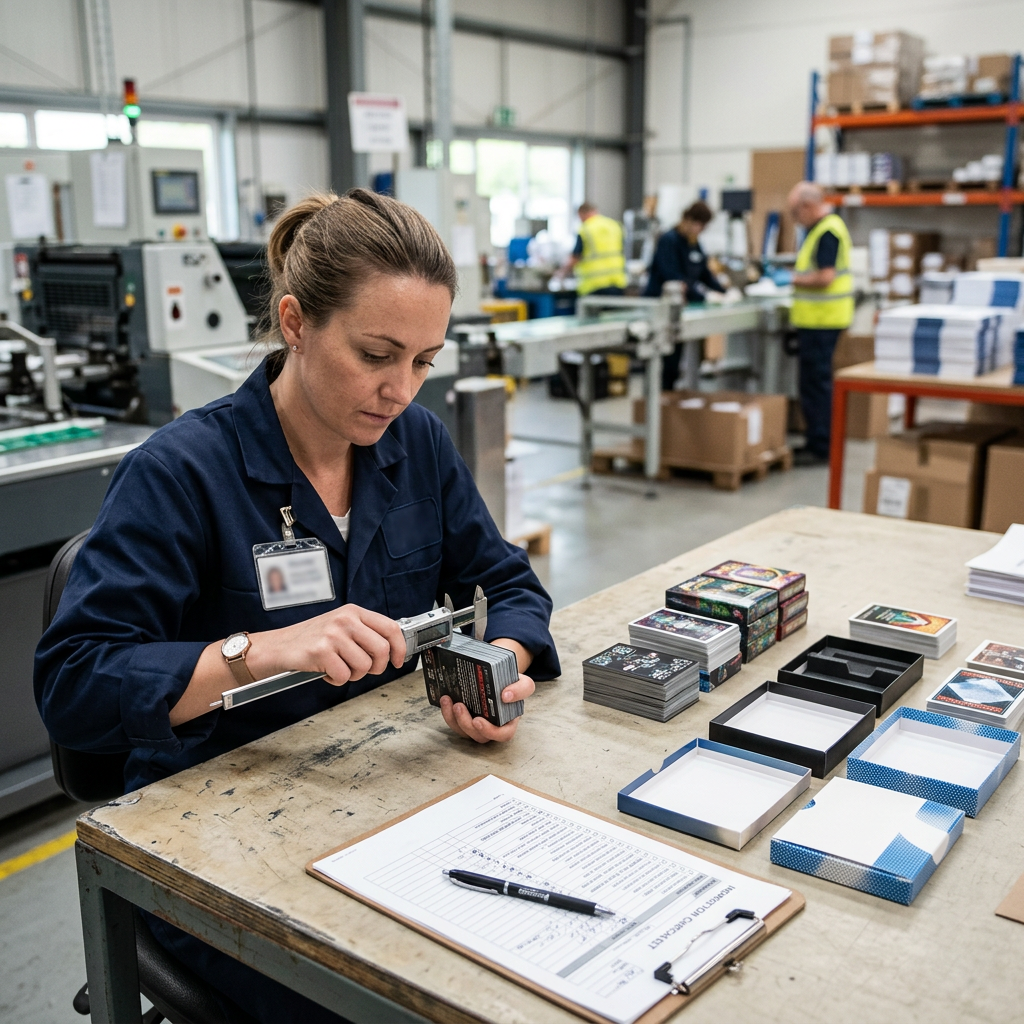
After the sample is approved, the bulk order should follow the agreed specification and approval record. A practical production sequence may include material preparation, printing, drying or curing where required, surface finishing, cutting, corner rounding, sorting, collation, packaging, final inspection, and carton packing.
Use measurable quality checkpoints
- Artwork: Confirm the correct files and revision are loaded for production.
- Print: Check registration, color consistency, text clarity, image detail, and card-back alignment.
- Material: Check stock, thickness, stiffness, surface condition, and opacity against the approved sample.
- Cutting: Inspect card dimensions, edge quality, and corner consistency.
- Collation: Verify card sequence, quantities, duplicate counts, and complete game contents.
- Packaging: Check box printing, fit, closure, inserts, shrink wrap, and labels.
Quality control should be planned as a series of checks rather than a single inspection at the end. YBJ Cards Printing describes a seven-stage quality control approach covering key production and packing steps. Buyers should still provide a clear acceptance standard, especially for color variation, edge marks, missing cards, packaging damage, and quantity shortages.
Before releasing a repeat order, review any defects or customer feedback from the first production run. Updating the specification sheet and inspection checklist can make later orders more consistent.
Prepare Packaging and International Shipping
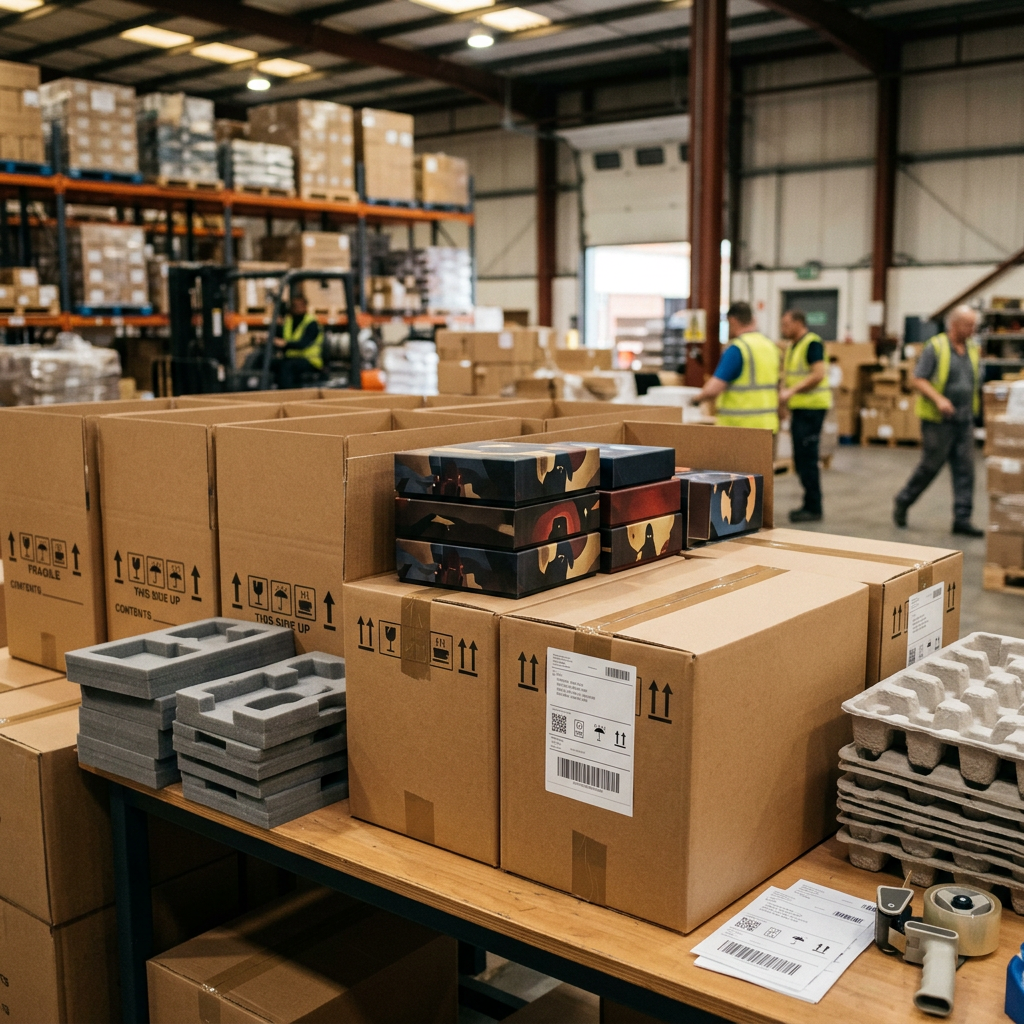
Packaging must protect the cards while presenting the product correctly for retail, distribution, or fulfillment. The choice between a tuck box, rigid box, drawer box, or custom set box depends on the game structure, target positioning, required protection, and packing method.
Confirm the internal fit before mass production. A box that is too tight may damage corners or make the cards difficult to remove. A box that is too loose can allow movement and surface wear during transport. If the game contains multiple decks or accessories, specify how each component is separated and whether the contents must be packed in a fixed order.
Export packing checklist
- Confirm the number of finished games per export carton.
- Review carton dimensions and approximate gross weight for logistics planning.
- Specify inner protection and carton strength appropriate to the shipment.
- Check carton marks, product labels, quantities, and destination information.
- Confirm shipping documents and consignee details before dispatch.
- Review whether the shipment is arranged by sea, air, courier, or another method.
Shipping timing depends on production completion, inspection, packing, route, destination, customs processing, and the selected transport service. A buyer should request a production schedule and shipping estimate based on the confirmed specification rather than relying on a general manufacturing timeline.
Conclusion: Build a Repeatable Card Game Supply Chain
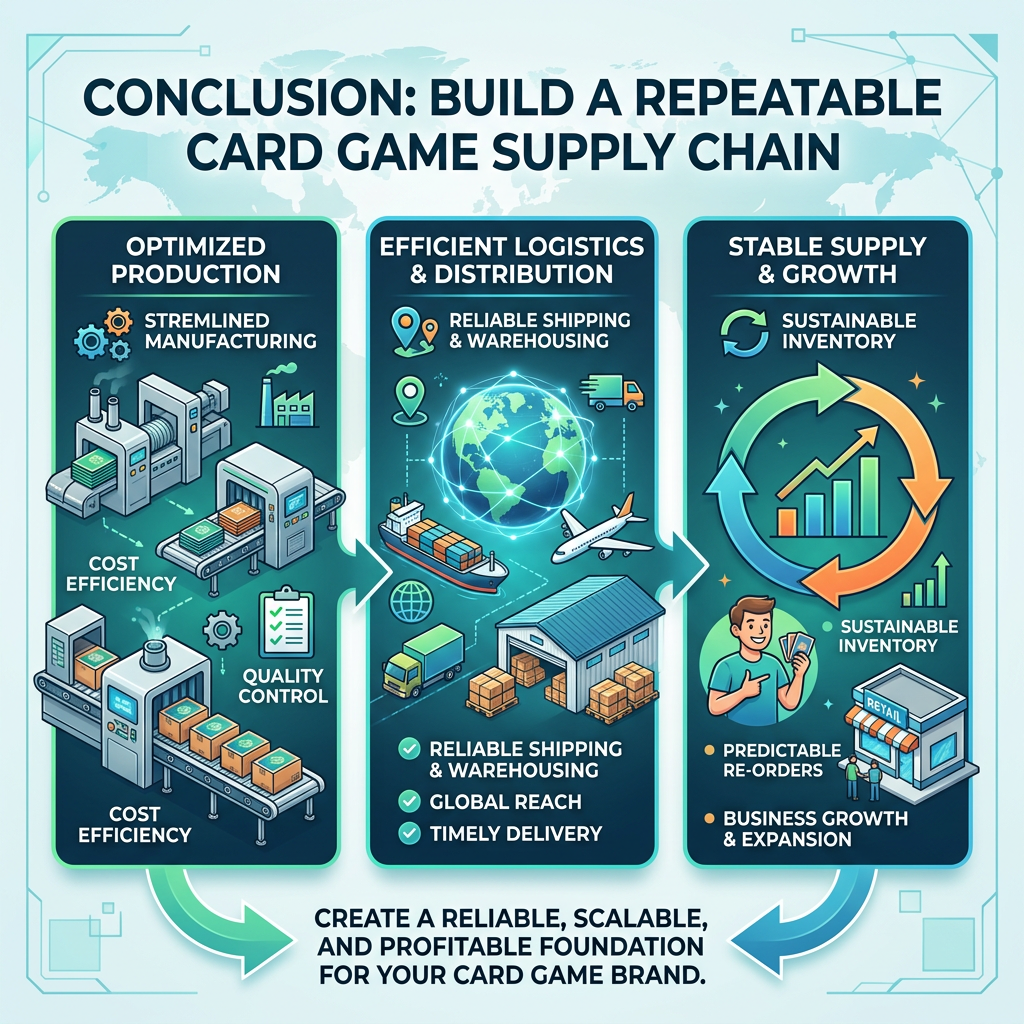
Learning how to manufacture a card game is mainly an exercise in controlling decisions before production begins. A tested prototype clarifies the game contents, a complete specification sheet defines the physical product, a physical sample confirms the intended result, and documented quality checks protect the bulk order.
The strongest B2B workflow is collaborative and version-controlled. Share complete files, ask technical questions early, approve a representative sample, and align packaging and shipping details before production starts. Specifications, MOQ, price, and lead time should always be confirmed for the specific project.
When the first order is complete, retain the approved sample, final artwork, packing instructions, and inspection notes. These records make future replenishment orders easier to quote and compare.
Request a Card Game Manufacturing Recommendation
Share your card type, finished size, material, quantity, finish, and packaging requirements with YBJ Cards Printing. Our team can review the project scope and prepare a tailored manufacturing recommendation and quotation.
Tags
Keep Reading
Related Articles
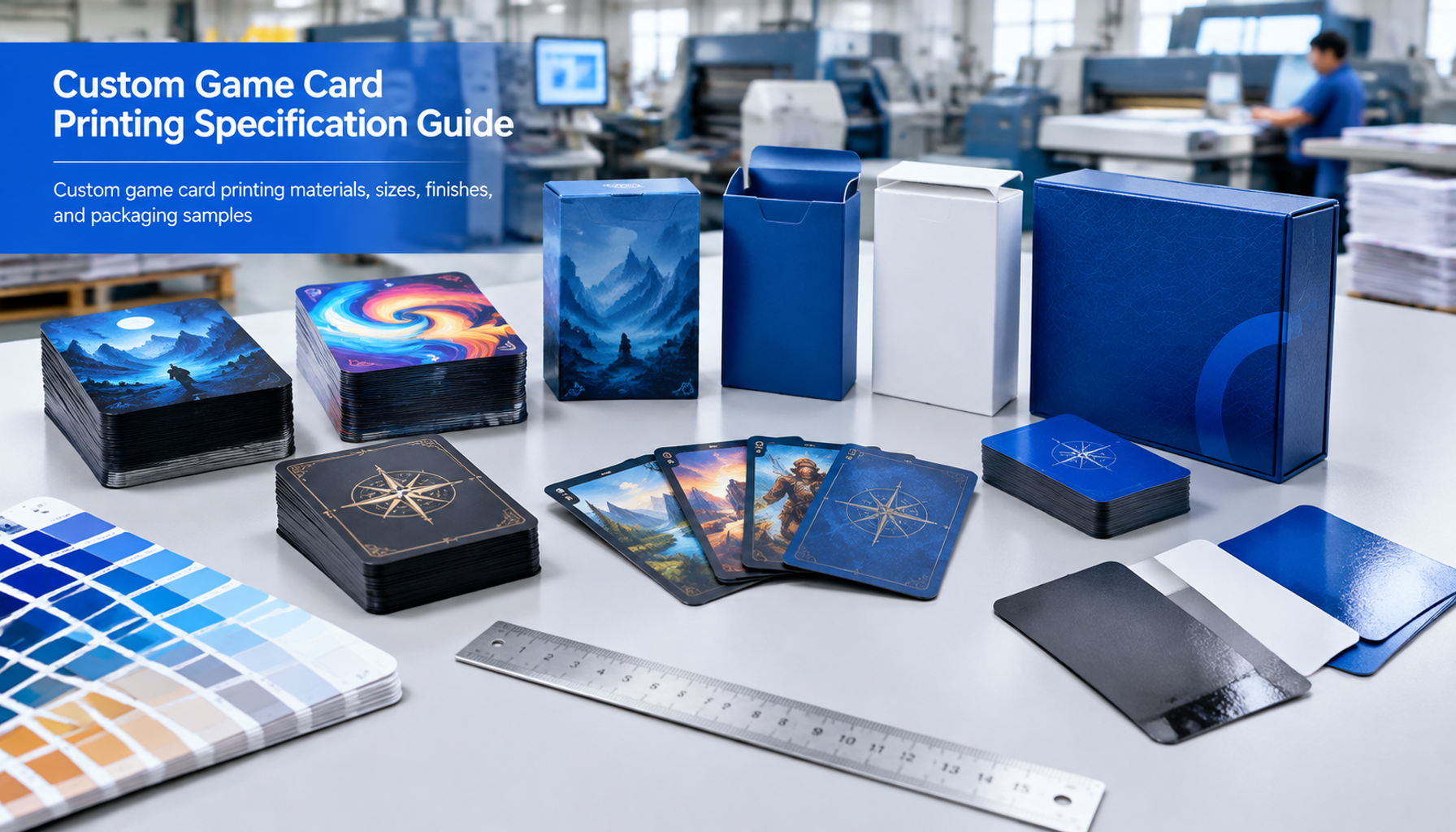
Custom Game Card Printing: A Buyer’s Specification Guide
A practical B2B guide to selecting game card stock, dimensions, surface finishes, packaging, samples, quality controls, and shipping arrangements.
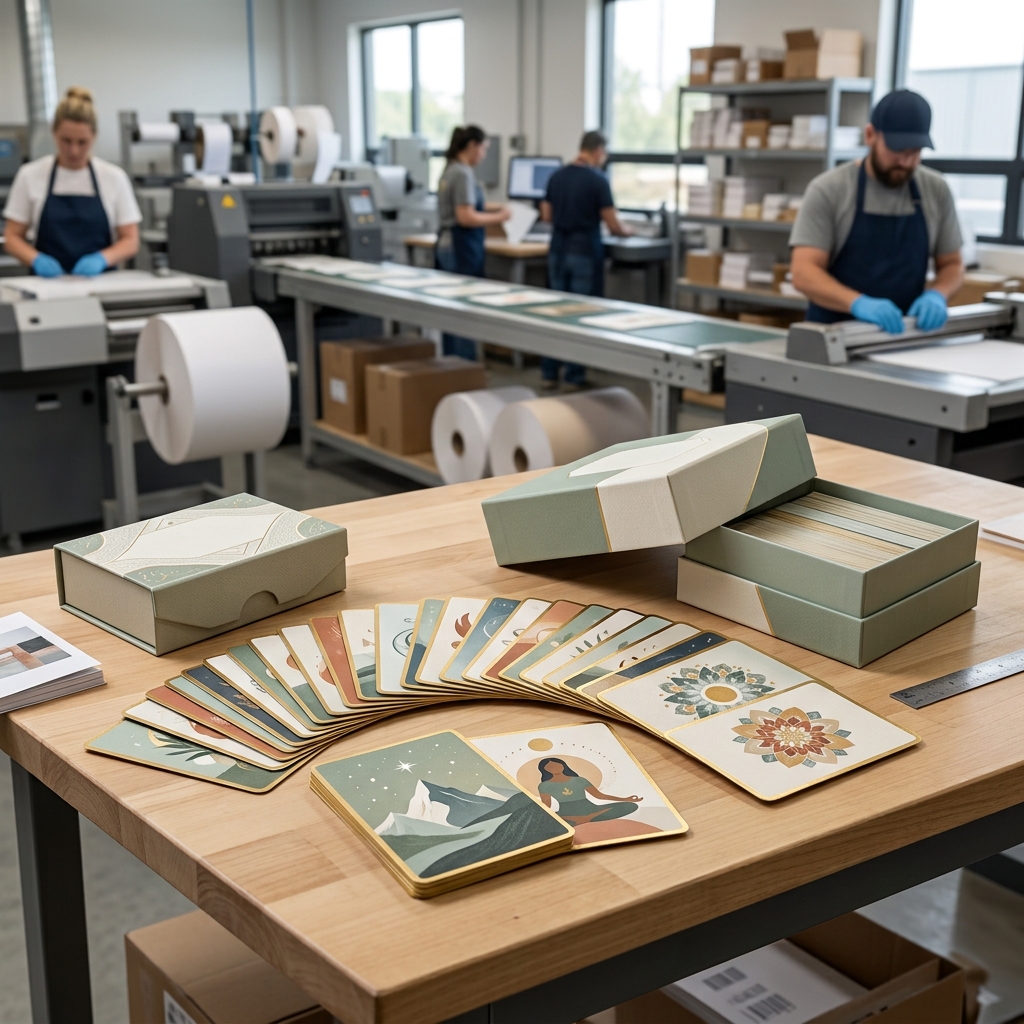
Custom Oracle Card Printing for Wellness Brands: A Practical Production Guide
Custom oracle card printing requires more than attractive artwork. Wellness brands must coordinate card dimensions, stock, finishes, packaging, sampling, quality control, and export shipping before approving bulk production. This guide explains the main decisions and production steps for creating a reliable oracle card deck.
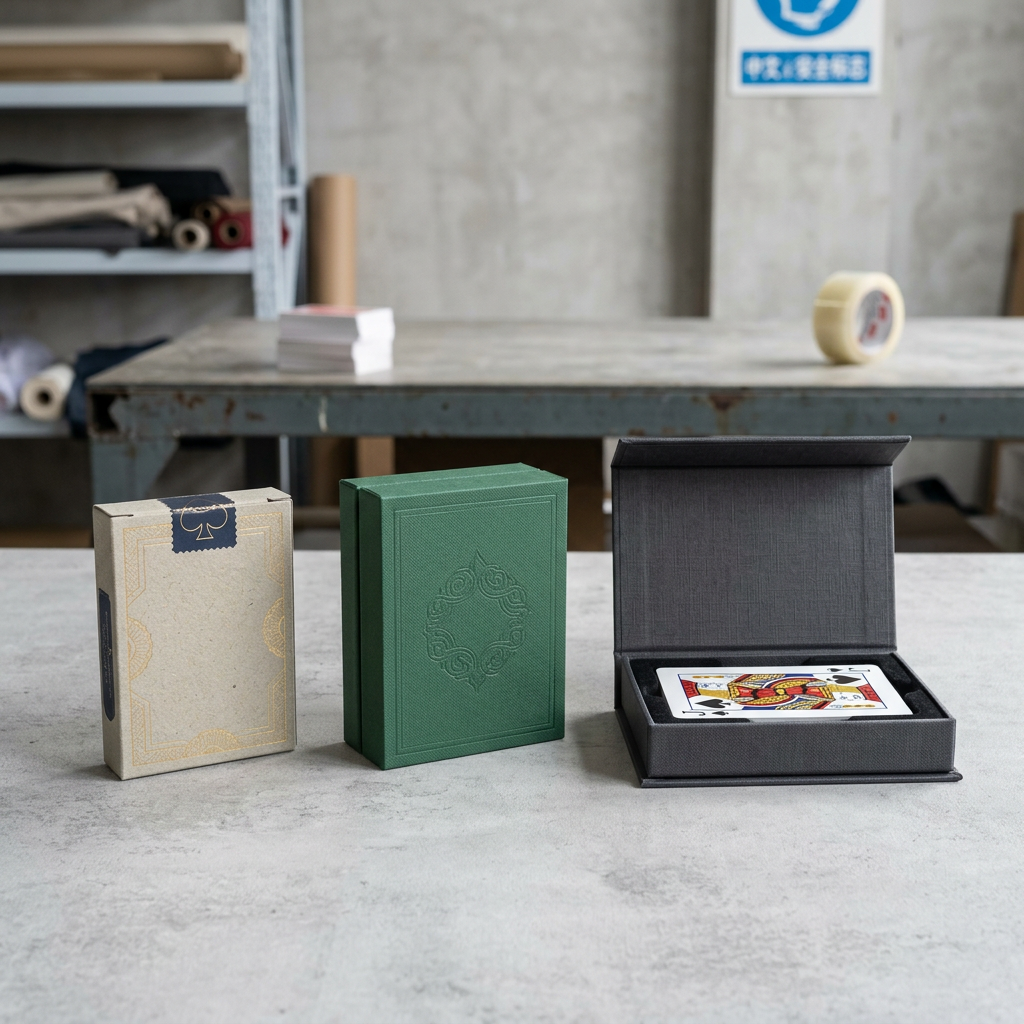
Custom Card Packaging: Tuck Boxes, Rigid Boxes, and Magnetic Cases Compared
The right custom card packaging depends on your product position, protection requirements, budget, order quantity, and shipping plan. Tuck boxes are efficient and cost-conscious, rigid boxes provide stronger structure and shelf impact, while magnetic cases create a premium unboxing experience. This guide compares each format and explains how to choose, sample, manufacture, inspect, and ship it.
Fast Quote Support
Ready to Start Your Custom Card Project?
Send us your product type, size, material, quantity, and packaging requirements. Our team will reply within 24 hours with production suggestions, sampling options, and a competitive quote. No setup fees.