
Custom Card Printing
Custom Tarot Card Printing: Deck Specifications, Finishes, and Packaging
Table of Contents
- What Custom Tarot Card Printing Involves
- Core Tarot Deck Specifications
- Card Stock and Surface Finishes
- Artwork Preparation, Sampling, and Proofing
- Tarot Card Packaging Options
- Production, Quality Control, and Shipping
- Buyer Specification Checklist
- Conclusion: Planning a Reliable Tarot Card Order
Custom tarot card printing requires more than artwork preparation. Buyers must coordinate deck size, card count, stock, finishes, packaging, sampling, quality control, and export shipping before approving bulk production. This guide explains the main decisions for publishers, game brands, retailers, spiritual product companies, and independent creators.
What Custom Tarot Card Printing Involves
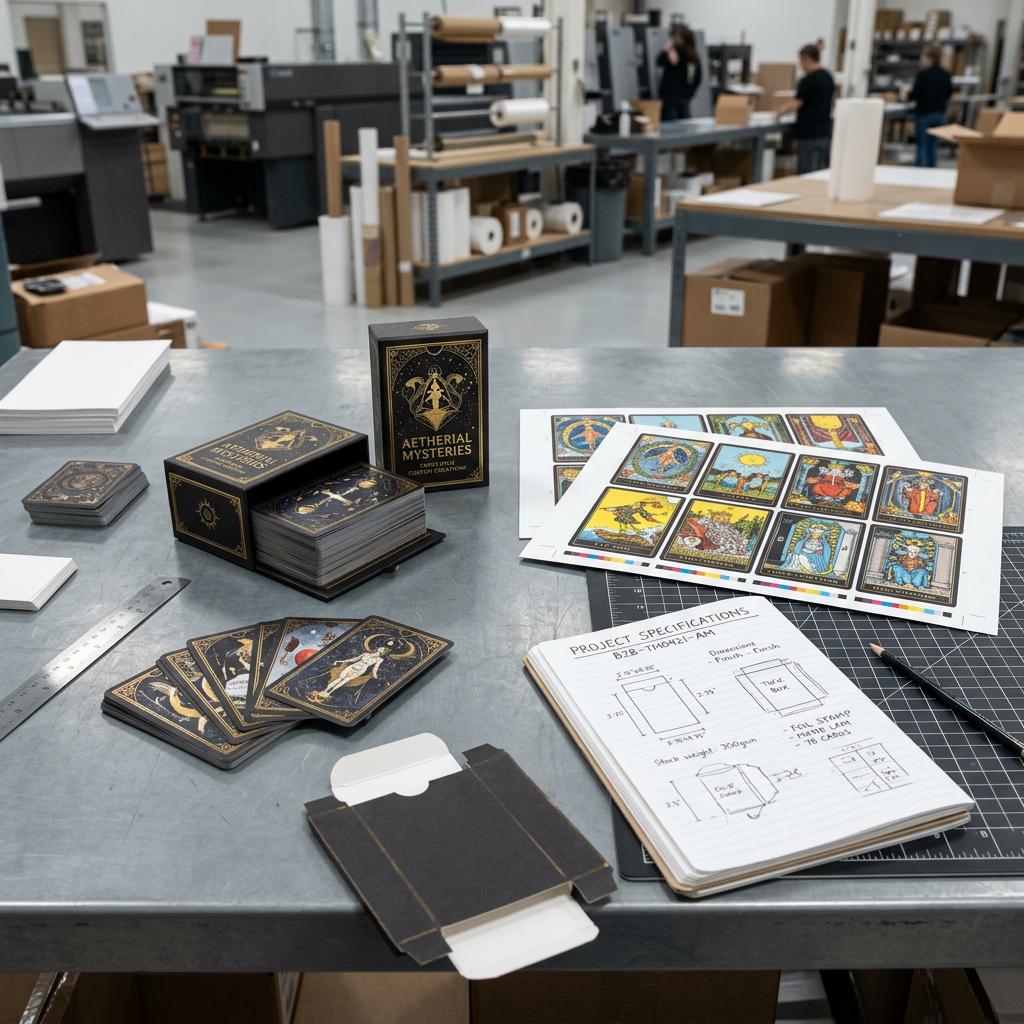
Custom tarot card printing is the process of producing a tarot deck to a buyer’s own artwork, card count, dimensions, materials, surface treatment, and packaging requirements. A dependable order starts by confirming the physical specification before final artwork and quotation.
For most B2B projects, the important decisions are the number of cards in the deck, finished card size, paperboard construction, corner radius, print coverage, coating or special finish, packaging format, order quantity, and shipping plan. These choices affect how the deck looks, shuffles, resists handling, fits inside its box, and moves through fulfillment.
YBJ Cards Printing supports artwork review, sampling, bulk production, quality checks, export packing, and worldwide shipping. Specifications, MOQ, price, and lead time depend on the project requirements, so buyers should request a tailored assessment rather than rely on a standard package.
Core Tarot Deck Specifications
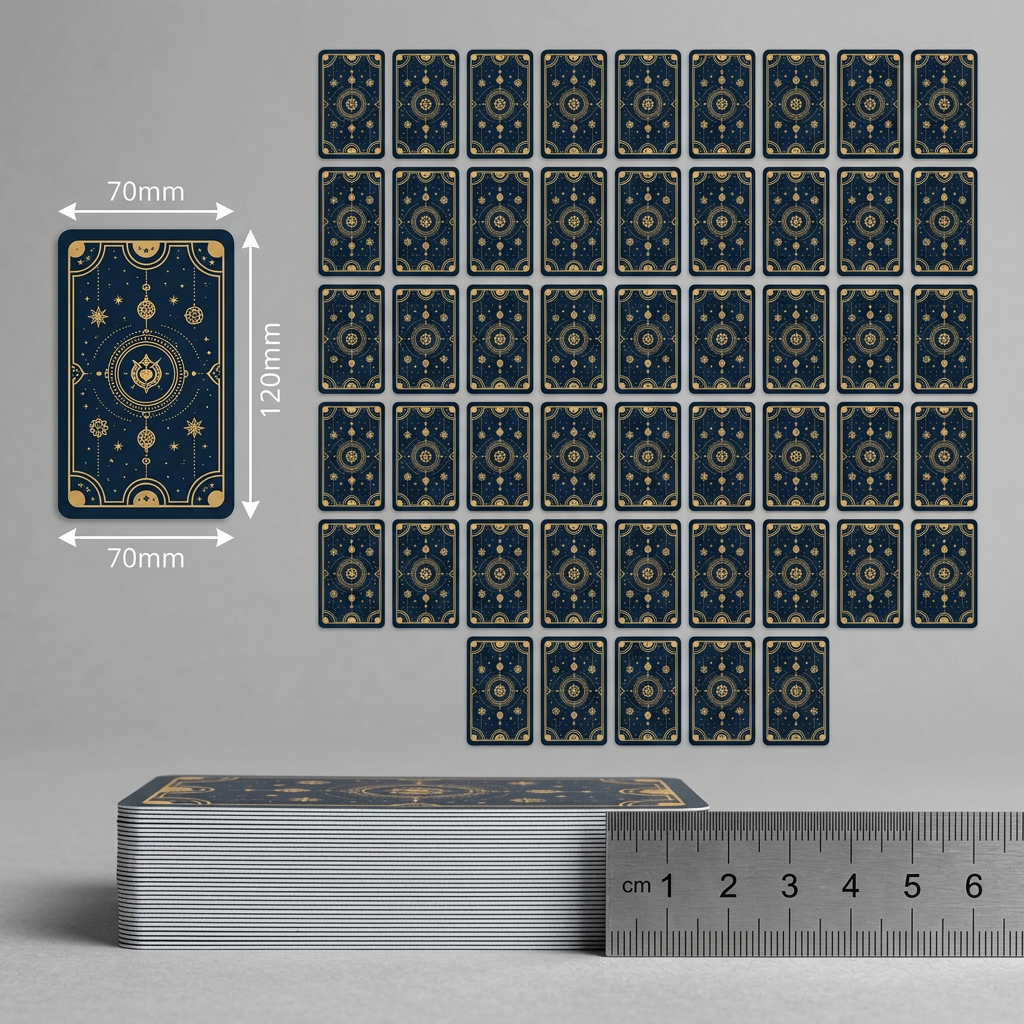
Before discussing finishes, define the deck’s measurable specifications. A clear specification sheet reduces revision risk and helps the manufacturer quote the same product that the buyer intends to sell.
Card count and contents
State the total number of cards and identify whether the deck includes a guide card, title card, reference card, blank card, or other insert. A traditional tarot structure may use a major and minor arcana, while an oracle-style product can use a different number of cards. The exact count determines the thickness of the deck and the internal dimensions of the packaging.
Finished size and shape
Specify the finished width and height, preferably in millimetres, and confirm whether all cards use one size. Standard proportions can simplify packaging and handling, while a custom size may strengthen brand positioning but require a dedicated box design. Confirm the corner radius because rounded corners influence cutting, visual appearance, and how the cards feel in use.
Printing and construction
- Print sides: Confirm whether the front, back, or both sides require full-colour printing.
- Artwork coverage: Identify full bleed, borders, solid backgrounds, metallic-looking artwork, or white areas.
- Card construction: Discuss the selected paperboard, possible core structure, thickness, flexibility, and opacity requirements.
- Back design: Check that the back artwork is aligned consistently and does not create an unintended orientation issue.
- Quantity: Separate the number of decks from the number of individual cards when preparing a quotation request.
Thickness should be evaluated as a finished deck rather than as an isolated card specification. Stock thickness, coating, card count, and tolerances all contribute to the final pack height.
Card Stock and Surface Finishes
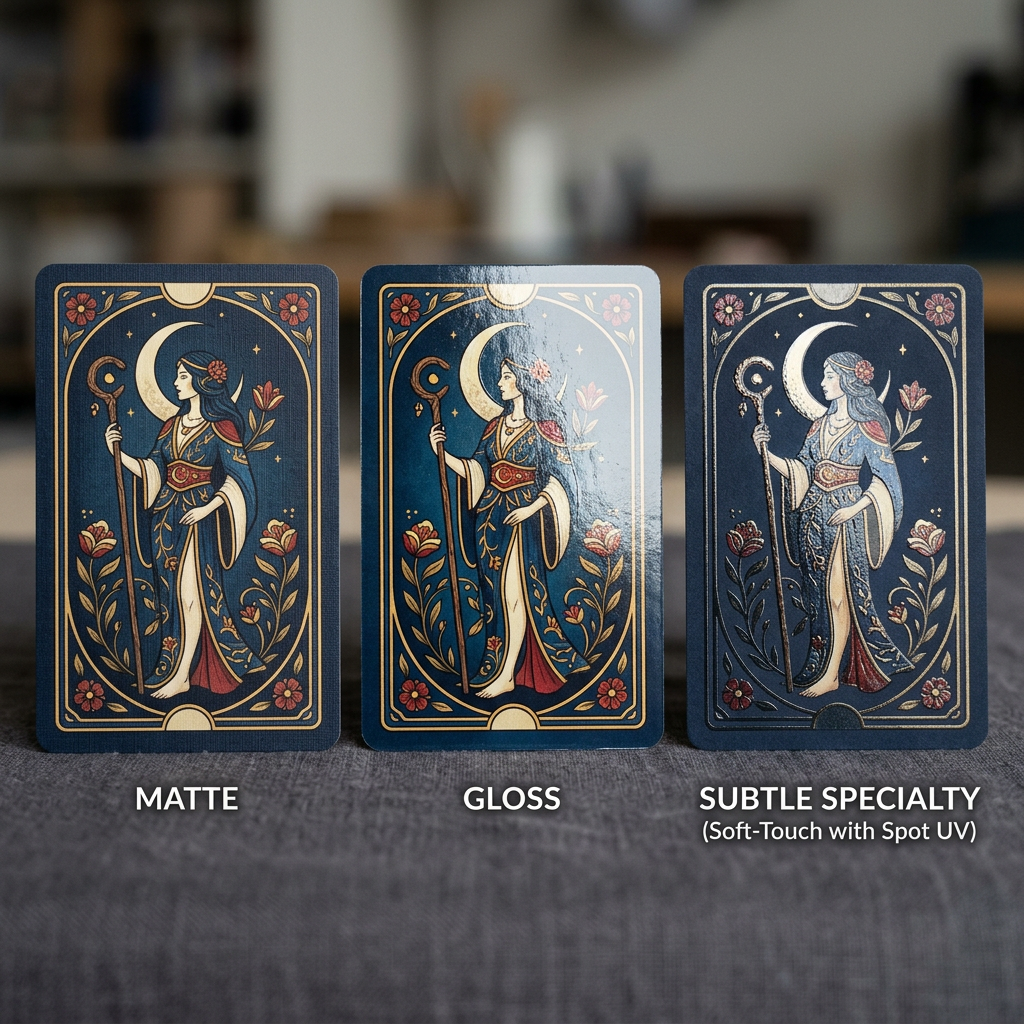
Card stock is the paperboard used to make the cards. The right choice balances stiffness, flexibility, opacity, print appearance, handling, and cost. There is no universally best stock; the practical choice depends on the deck’s intended use and target market.
Common finish decisions
- Matte coating: Creates a subdued appearance and can reduce surface glare. It is often considered for decks with a soft, premium, or editorial visual direction.
- Gloss coating: Produces a brighter reflective surface and can make colours appear visually strong. Glare and fingerprints should be considered for regular handling.
- Varnish: A printed or applied surface treatment that can protect the artwork and change the feel of the card. The exact result depends on the selected process.
- Special effects: Foil, spot effects, textured treatments, or other embellishments can highlight titles, symbols, borders, or packaging details. These require separate artwork layers and technical review.
Finish selection can affect shuffle feel, scratch visibility, colour perception, and production complexity. Dark full-coverage artwork, fine lines, and large solid areas should be checked carefully during sampling. If a deck must be read under bright lighting, glare may matter more than visual shine. If shelf impact is the priority, a reflective treatment may be useful on selected elements rather than across every surface.
Discuss the intended handling conditions with the manufacturer: personal use, retail display, frequent readings, workshops, gift sets, or educational use. Request a physical sample when tactile feel, flexibility, colour, or coating performance is important.
Artwork Preparation, Sampling, and Proofing
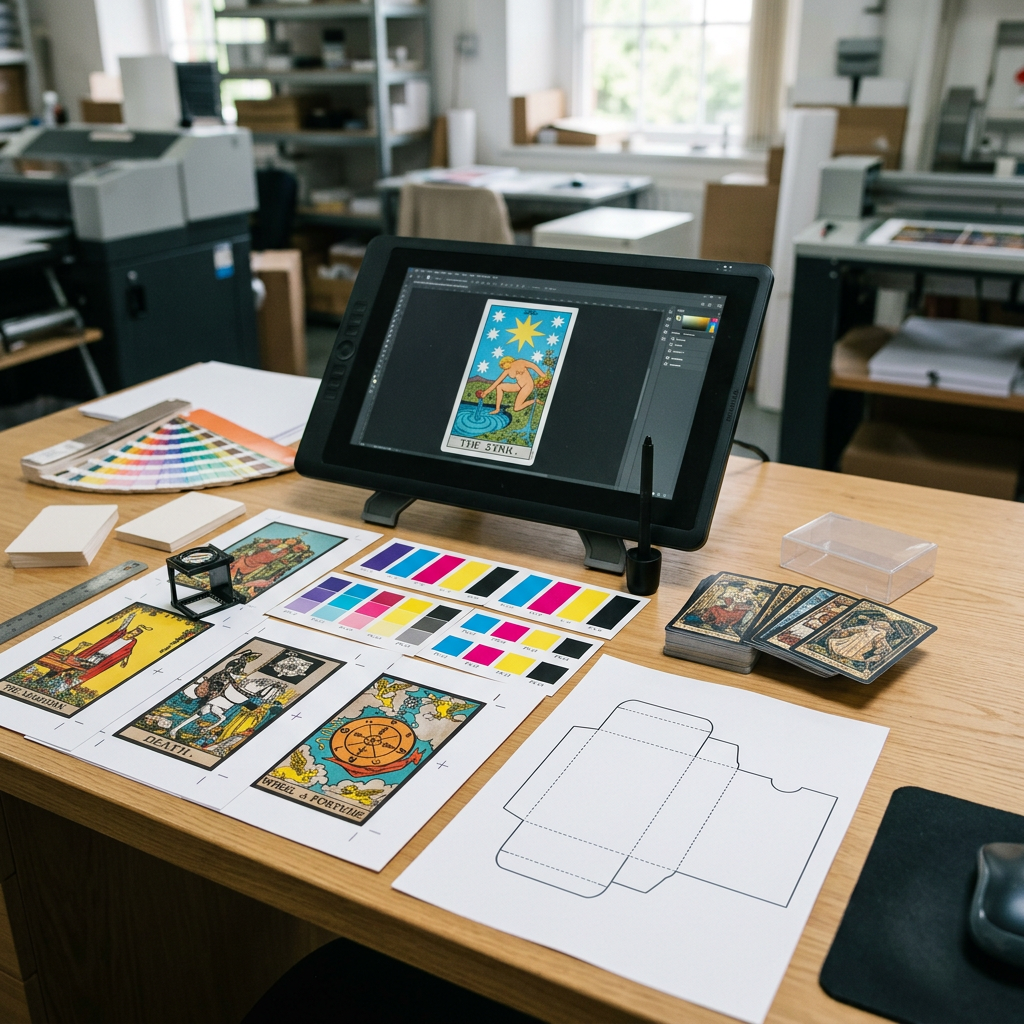
Tarot artwork often contains fine borders, small typography, gradients, symbolic details, and colour-sensitive illustrations. Artwork review should therefore happen before production rather than after files are sent to press.
Prepare production-ready files
Provide the card fronts and backs in an organised file structure, with clear file names and a card list. Confirm bleed, trim lines, safe areas, colour mode, image resolution, font handling, and the required file format with the manufacturer. Keep important text and symbols away from the trim area. If the deck includes foil or spot treatment, place those elements on clearly named separate layers.
Use the custom card printing artwork requirements guide to review bleed, colour, resolution, fonts, and file preparation before submitting final artwork.
Distinguish a proof from a physical sample
A digital proof mainly confirms layout, text, sequence, and visible artwork placement. A physical sample or pre-production sample allows the buyer to assess card feel, colour appearance, coating, corner cutting, deck thickness, and packaging fit. These serve different purposes, and a buyer may need both depending on project risk.
Approve a signed or documented reference sample before bulk production. Any later changes to card count, dimensions, stock, finish, or packaging should be reviewed because they may change the quotation and production plan.
Tarot Card Packaging Options
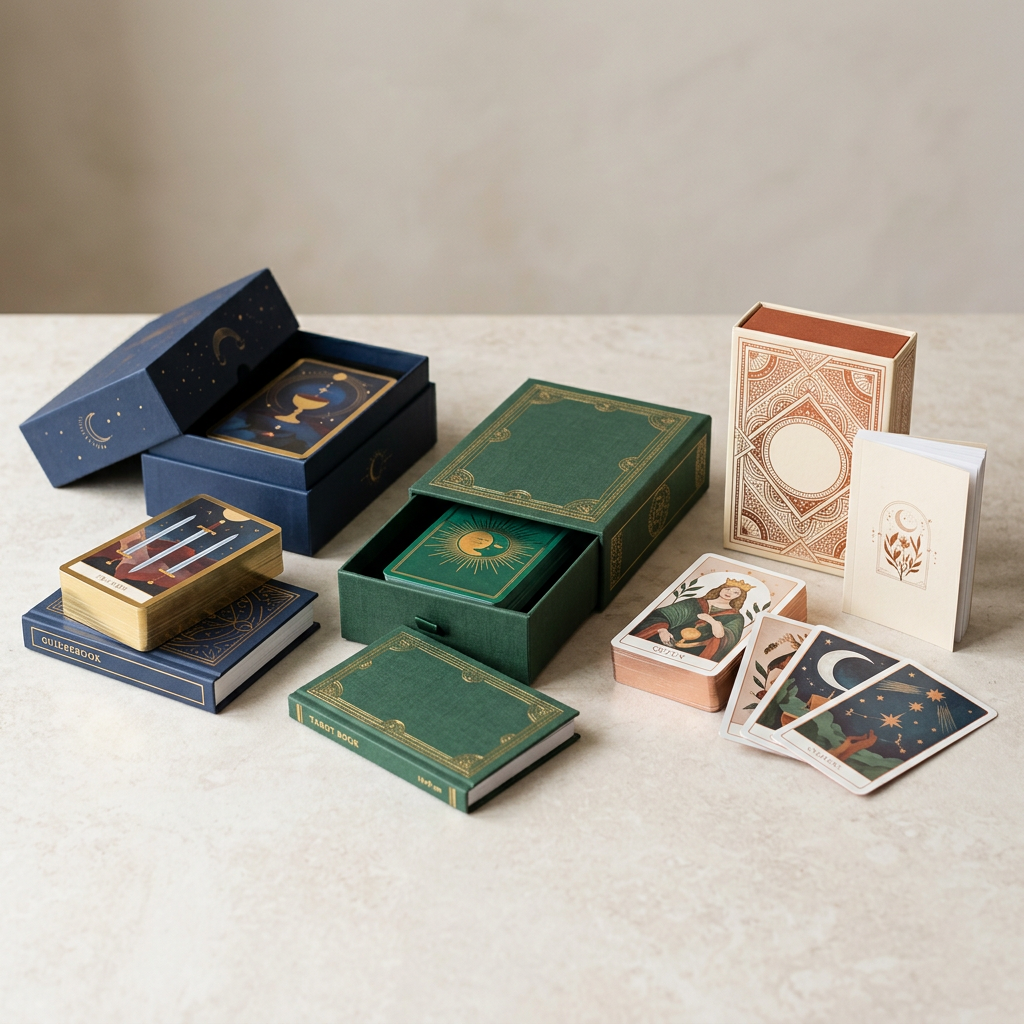
Packaging protects the deck, presents the brand, and determines how the product is stored and shipped. Choose the box after confirming the finished deck dimensions, not only the individual card size.
Common packaging formats
- Two-piece rigid box: A separate lid and base can create a substantial gift presentation and provide structured protection.
- Drawer box: An outer sleeve and sliding tray offer a distinctive opening experience and can hold a guidebook or accessory if the internal space is planned correctly.
- Folding carton: A paperboard carton can be lighter and easier to store, while its construction and board grade should match the product’s weight and retail positioning.
- Magnetic or specialty box: Additional structure or closures can support a premium presentation but may increase material, assembly, and shipping considerations.
Packaging specifications should include box style, board material, printed sides, coating, insert or tray design, guidebook dimensions, accessory compartments, closure method, and quantity per export carton. The internal fit should be tested with the finished deck, including any shrink wrap, booklet, or protective insert.
For a reference product format, review the custom affirmation tarot cards with box page. Packaging artwork should also include barcode placement, legal text, product identifiers, and language requirements where applicable to the destination market.
Production, Quality Control, and Shipping

After specification approval and sampling, the project moves into bulk production. A practical workflow normally includes quotation confirmation, artwork inspection, proof or sample approval, material preparation, printing, finishing, die cutting, collation, packaging, inspection, export packing, and shipment.
Quality control should address both appearance and function. Relevant checks can include card count, sequence, dimensions, corner cutting, print registration, colour consistency, surface finish, edge quality, box fit, booklet contents, and packing quantity. YBJ Cards Printing uses a seven-stage quality control approach for production monitoring; the exact inspection scope should still be confirmed for each project.
Packaging for export should protect cards and boxes from compression, abrasion, moisture exposure, and movement during handling. Buyers should confirm carton dimensions, carton quantity, pallet requirements if applicable, shipping marks, and required export documents with the supplier and freight partner.
Choose shipping based on order size, destination, required control, and budget. Specifications, MOQ, price, and lead time depend on the selected materials, finishes, packaging, order quantity, artwork readiness, and shipping arrangement. No production schedule should be treated as final until those variables are confirmed.
Buyer Specification Checklist
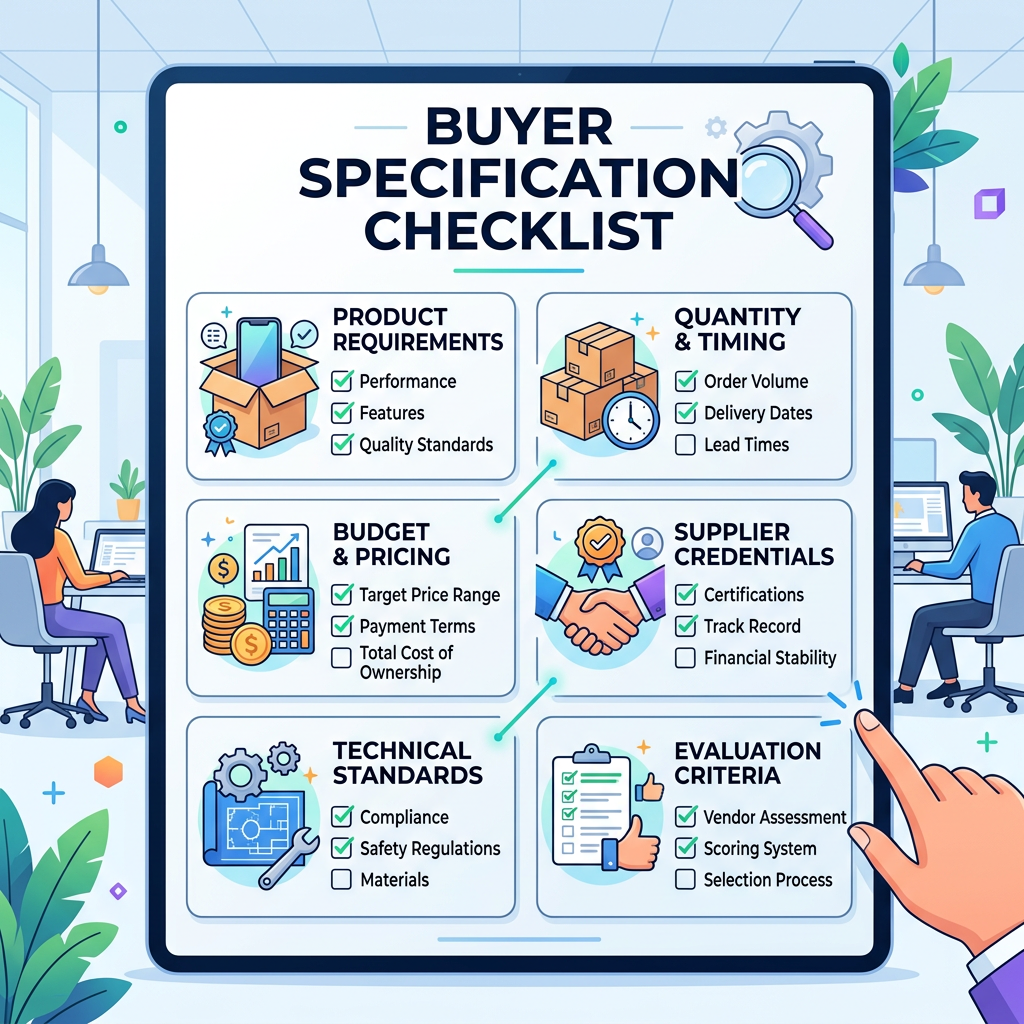
Send the following information when requesting a quotation for a tarot deck:
- Card type: tarot, oracle, affirmation, educational, or game deck.
- Total card count and any additional cards or inserts.
- Finished card size, corner radius, and preferred deck thickness.
- Card stock or performance requirements, including flexibility and opacity.
- Front and back printing requirements, artwork coverage, and colour expectations.
- Matte, gloss, varnish, foil, texture, or other finish requirements.
- Packaging style, box dimensions, guidebook, insert, and accessory requirements.
- Quantity of decks, target market, destination country, and preferred shipping method.
- Artwork status, file format, sampling preference, and approval procedure.
- Required carton markings, barcode information, and packing instructions.
This information allows the manufacturer to identify technical risks early and prepare a more relevant recommendation. If some items are not decided, state the intended retail position and use case so the supplier can suggest practical alternatives.
Conclusion: Planning a Reliable Tarot Card Order
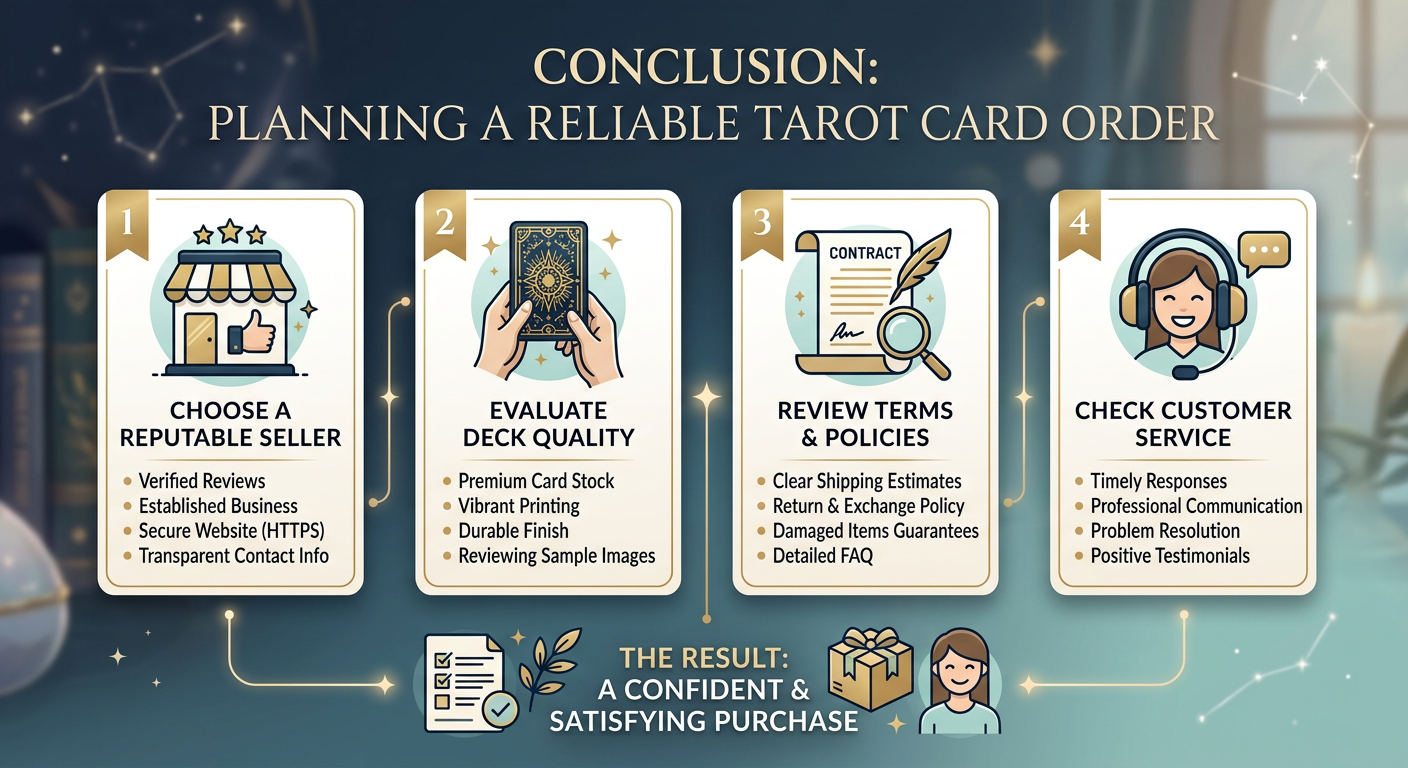
A successful custom tarot card printing project connects artwork, card construction, finish, packaging, quality control, and shipping into one coordinated specification. Confirm the deck structure and dimensions first, evaluate stock and finishes through sampling, test the box with the finished contents, and approve a clear production reference before bulk manufacturing.
For B2B buyers, the best specification is not necessarily the most elaborate one. It is the option that delivers the intended handling feel, shelf presentation, protection, and cost position for the target market. MOQ, price, and lead time depend on the complete project requirements and should be confirmed in a formal quotation.
Request a Custom Tarot Deck Recommendation and Quote
Share your card type, finished size, card count, material, quantity, finish, artwork status, and packaging requirements with YBJ Cards Printing. Our team can review the specification and recommend a practical production approach for your market.
Keep Reading
Related Articles

Custom Oracle Card Printing for Wellness Brands: A Practical Production Guide
Custom oracle card printing requires more than attractive artwork. Wellness brands must coordinate card dimensions, stock, finishes, packaging, sampling, quality control, and export shipping before approving bulk production. This guide explains the main decisions and production steps for creating a reliable oracle card deck.
Custom Membership Card Printing: Paper, PVC, and Smart Card Options Compared
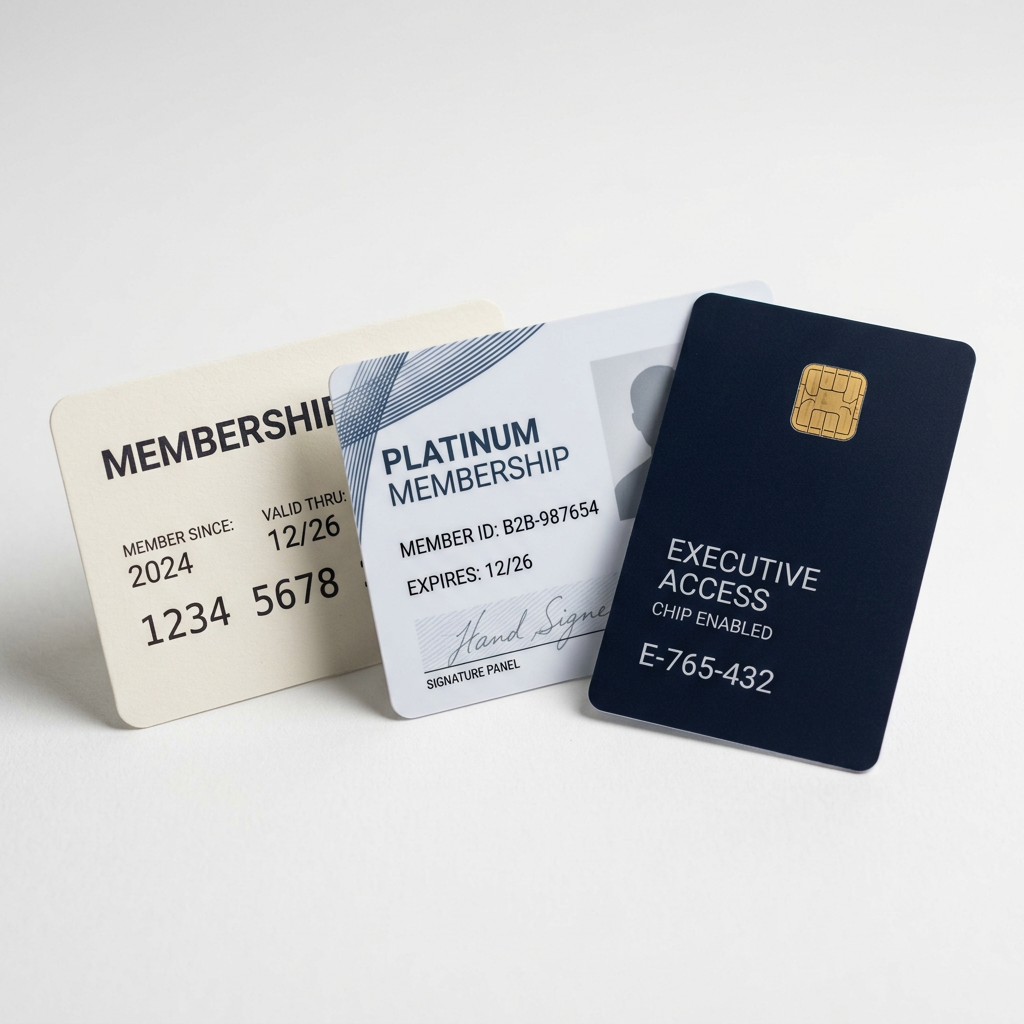
The best custom membership card material depends on how members will use the card, how long it must last, whether it needs electronic functions, and how much customization the program requires. Paper cards suit short-term or low-cost promotions, PVC cards provide durable everyday identification, and smart cards support access, payment, or digital data applications. This guide compares the three options and explains how to plan specifications, sampling, production, quality control, packaging, and shipping.
Custom PVC Card Printing for Membership and Loyalty Programs
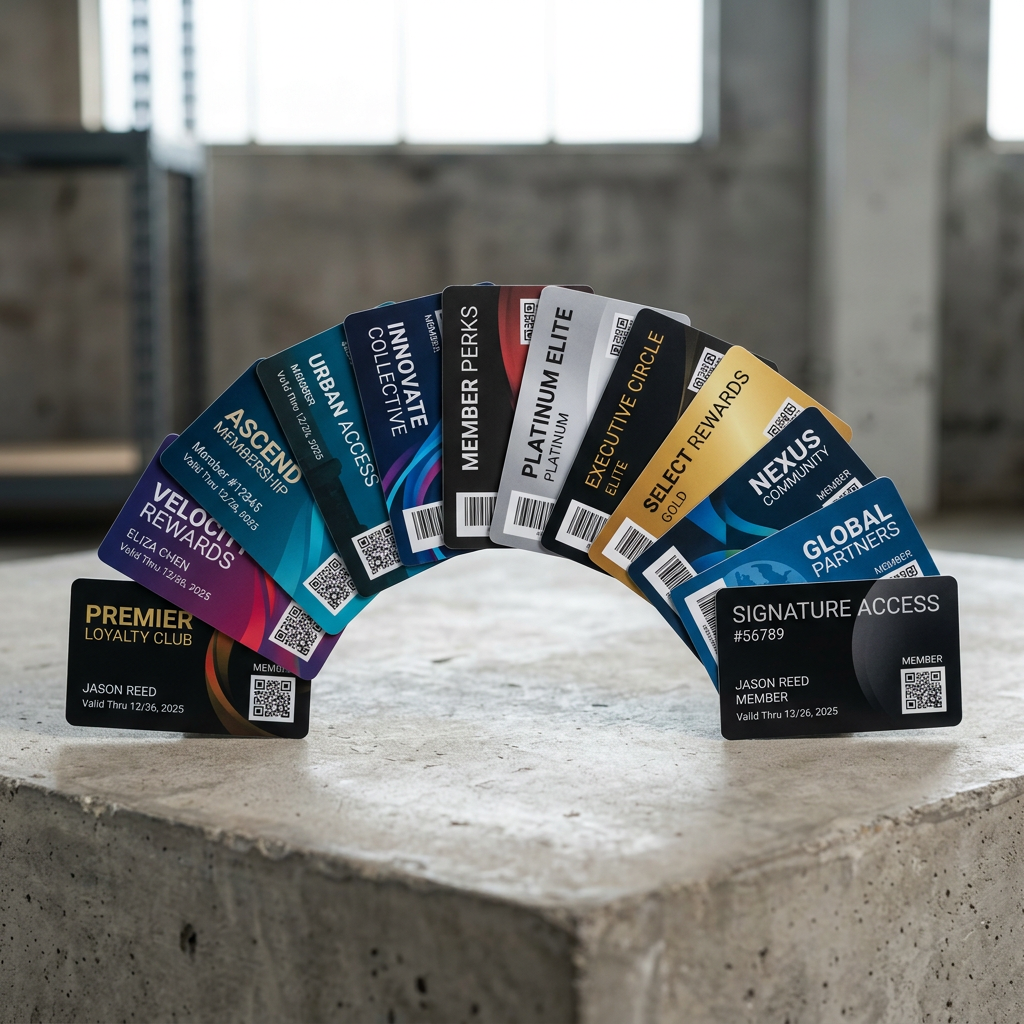
Custom PVC card printing gives membership and loyalty programs a durable, professional card format for identification, access, rewards, and customer engagement. This guide explains how to plan specifications, artwork, personalization, sampling, production, quality control, packaging, and international shipping.
Fast Quote Support
Ready to Start Your Custom Card Project?
Send us your product type, size, material, quantity, and packaging requirements. Our team will reply within 24 hours with production suggestions, sampling options, and a competitive quote. No setup fees.