
Product Guides
Custom Affirmation Card Printing: Retail Deck Planning
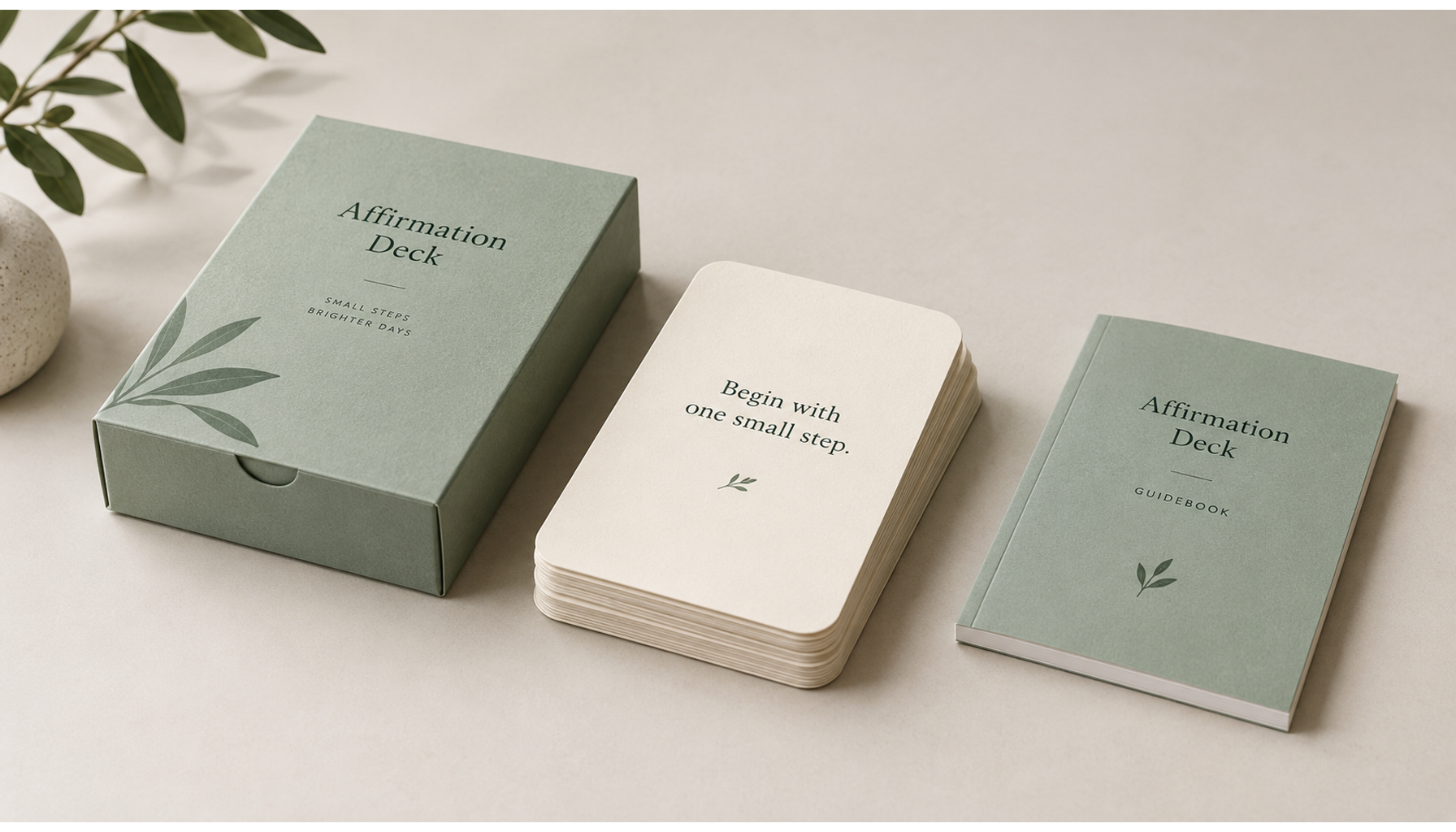
Table of Contents
- Start With the Daily Reading Experience
- What Is a Retail Affirmation Deck?
- Build a Custom Affirmation Card Printing Brief
- Typography for Printed Cards: Make Every Message Readable
- Compare Materials and Matte Card Finishes
- Match Retail Deck Packaging to the Sales Channel
- Move From Sample Approval to Bulk Production
- Plan MOQ, Cost, and Shipping Together
- Frequently Asked Questions
- Key Takeaways for Your Retail Deck
Plan a retail affirmation deck around readable text, comfortable daily handling, and gift presentation. Learn how to specify cards, finishes, guidebooks, packaging, samples, and bulk production.
Start With the Daily Reading Experience
Successful custom affirmation card printing starts with readable messages, cards that feel comfortable in daily use, and packaging suited to your retail channel. Finalize these together before requesting production pricing: card dimensions, text length, stock, finish, deck count, and box construction all affect the finished product.
For wellness brands, publishers, and gift suppliers, the central question is how the buyer will use the deck. A bedside card may need to stand upright in a separate holder; a travel deck needs compact dimensions; a gift set may need room for a booklet. Specify any accessories separately rather than assuming they are included.
YBJ Cards Printing is a China-based manufacturer with more than 20 years of experience supporting artwork review, sampling, bulk production, seven-stage quality control, export packing, and worldwide shipping. Specifications, MOQ, price, and lead time depend on project requirements.
What Is a Retail Affirmation Deck?
An affirmation deck is a set of printed cards carrying short, supportive statements or reflection prompts. A retail-ready deck adds the protective packaging, product information, and identification needed for its intended sales channel.
Affirmation deck manufacturing therefore covers both the cards and the assembled product. Buyers should specify whether the set includes instruction cards, a guidebook, dividers, or other components. In gifting, the phrase wellness gift cards can be ambiguous: describe the product as a physical affirmation deck when requesting a quote so it is not confused with a stored-value card.
Keep marketing claims appropriate to the content. Supportive messages should not imply clinically proven outcomes without evidence.
Build a Custom Affirmation Card Printing Brief
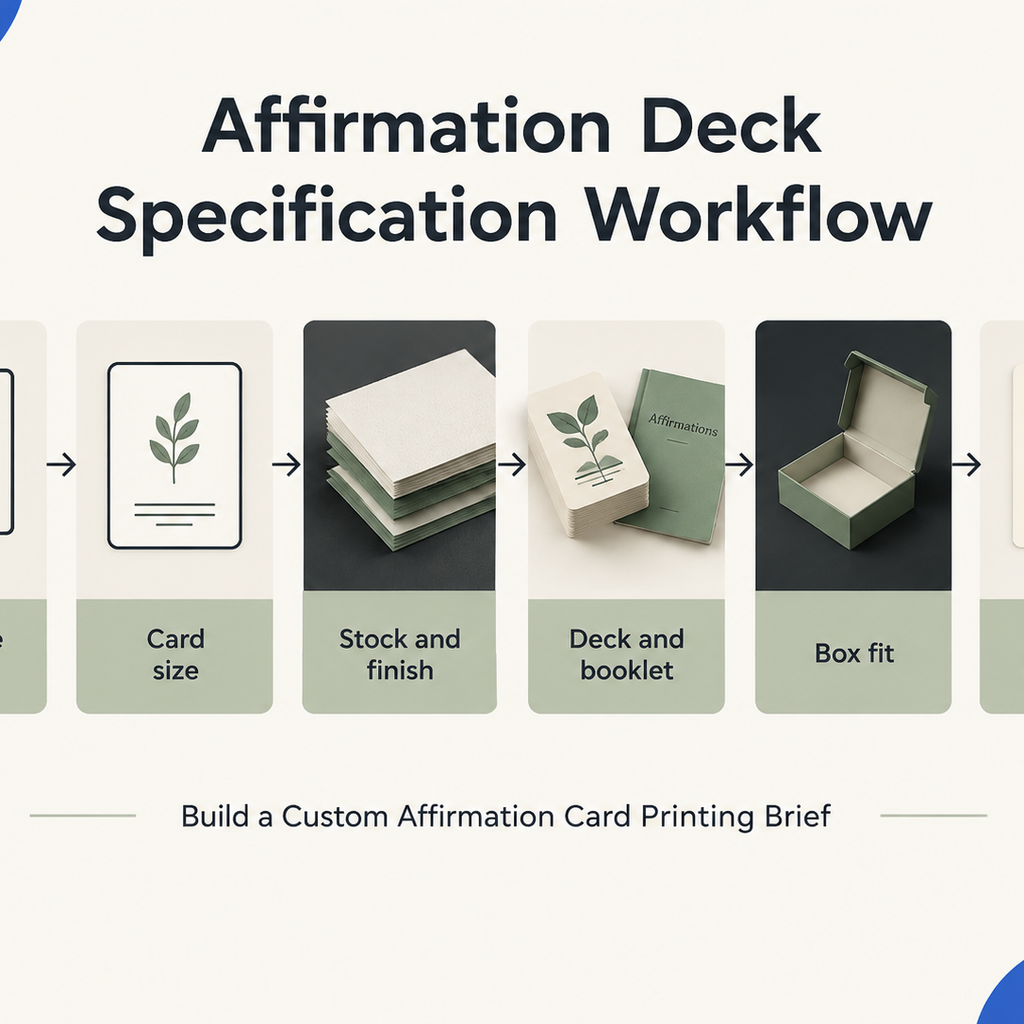
A complete brief makes supplier quotations comparable and exposes box-fit problems before artwork is finalized. Record the following in one specification sheet.
- Cards: finished width and height, corner shape, number of unique cards, and total cards per deck.
- Material: stock reference, grammage, thickness, opacity, and preferred handling feel.
- Printing: artwork on each side, color requirements, and any shared card back.
- Finish: coating or lamination, plus the location of any decorative treatment.
- Contents: instruction cards, booklet page count, language versions, and assembly order.
- Packaging: box structure, insert, barcode area, protective wrapping, and carton requirements.
- Order: quantity per version, destination, target launch date, and sample expectations.
GSM means grams per square meter and describes paper mass, not thickness. Two stocks with the same GSM can produce different stack heights. Use the card stock thickness and core selection guide to distinguish these measurements, then confirm the actual construction with a physical sample.
Typography for Printed Cards: Make Every Message Readable
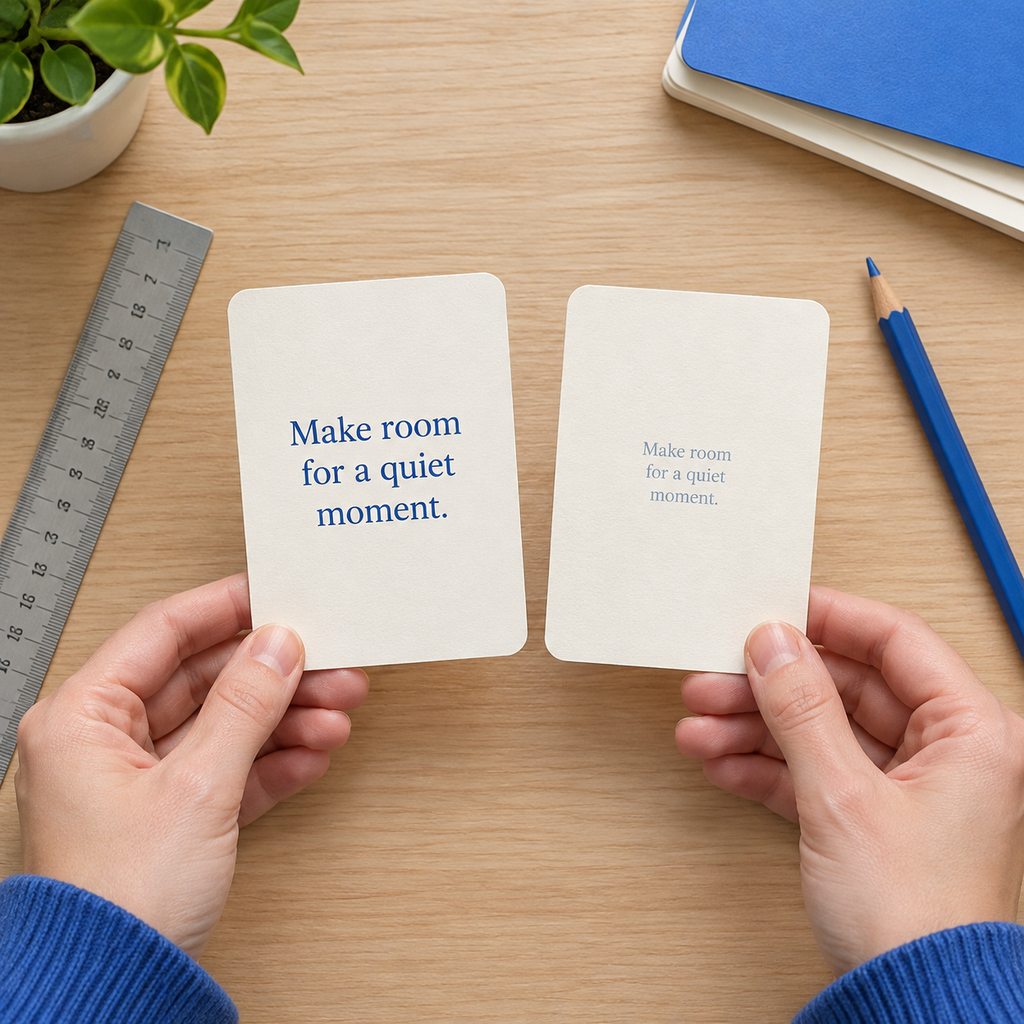
Approve typography at the actual printed size. A layout that looks spacious on a monitor can become difficult to read when reduced to a handheld card.
Typography for printed cards should accommodate the longest message in the deck. Choose a consistent type hierarchy, limit decorative lettering to short accents, and keep essential text away from cutting edges and rounded corners. Do not shrink only the longest cards until the deck feels inconsistent; edit the copy or adjust the shared layout.
Bleed is artwork extended beyond the final trim edge. A safe area keeps important content inside that edge. Request the printer’s template for both, and keep text, borders, and logos within its recommended limits. For small dark text, ask prepress whether single-channel black is appropriate to reduce registration-related softness.
Use strong text-to-background contrast and examine reversed lettering, pale inks, and textured backgrounds on a physical proof. The Round Table clear print guidelines provide an accessibility reference; final legibility still depends on size, stock, finish, lighting, and the reader.
Lock spelling, punctuation, capitalization, and card order before proof approval. Custom affirmation card printing makes editorial mistakes especially visible because the message is the main product.
Compare Materials and Matte Card Finishes
Select the stock and finish as a combination. Card stiffness, surface friction, opacity, and resistance to marking affect daily handling more directly than a finish name alone.
| Option | Potential benefit | Trade-off to check |
|---|---|---|
| Matte-coated stock with protective varnish | Restrained appearance with a relatively light surface treatment | Scuffing, sheen, and protection depend on the coating system |
| Matte lamination | Low-glare appearance and an added film layer | Changes stack thickness and handling; check dark areas for marks |
| Soft-touch lamination | Distinctive tactile feel for gift presentation | Fingerprint visibility, rubbing, and card separation need testing |
| Gloss treatment | Reflective surface that can emphasize saturated artwork | Reflections may interfere with reading under direct light |
Matte card finishes can suit text-led decks, but they do not guarantee scratch resistance. Request the specific treatment name and a representative sample. If an older sample uses different stock, record that limitation.
Check whether text or illustrations show through from the reverse. Also test whether several cards stick together after packing. For custom affirmation card printing, easy daily selection often matters more than an elaborate decorative finish.
Match Retail Deck Packaging to the Sales Channel
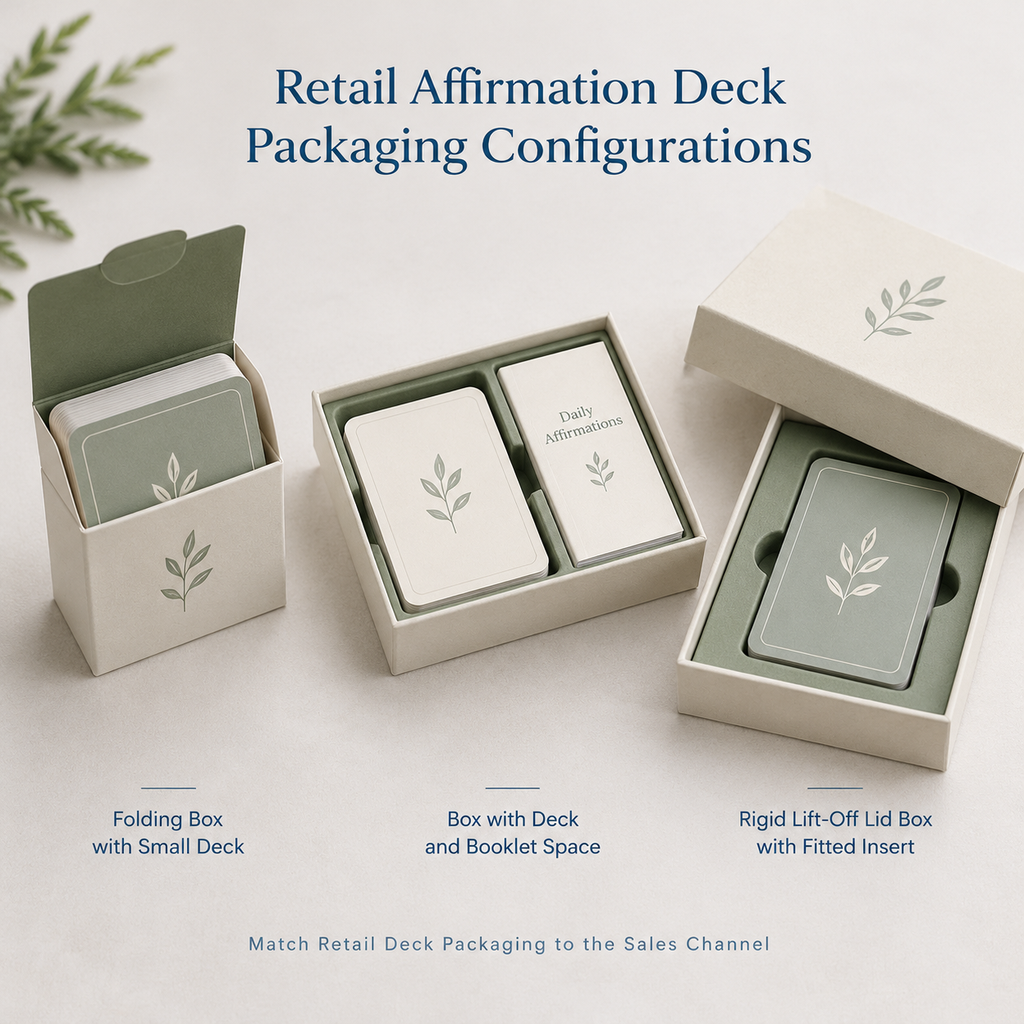
Choose retail deck packaging around shelf presentation, repeated opening, and fulfillment costs. Confirm internal dimensions using the finished deck and booklet rather than estimating from card count.
| Product format | Components to specify | Main planning question |
|---|---|---|
| Compact retail deck | Cards, instruction card, folding box | Can customers remove and replace the deck comfortably? |
| Booklet-supported deck | Cards, printed guidebook, fitted box | Does the booklet fit without bending or compressing cards? |
| Gift presentation set | Cards, rigid box, optional insert and booklet | Does the presentation justify added packing and freight volume? |
The affirmation cards with folding box and custom affirmation cards with box product pages offer starting points for a brief. Confirm dimensions, materials, contents, and available customization for your order.
Guidebook printing adds decisions about page count, paper, binding, and minimum readable type size. Use a short instruction card when guidance is brief; consider a booklet when exercises or translations need more space. Approve its page sequence separately.
Reserve space for required product information and retailer barcodes before decorating the box. If a retail partner requires a GTIN, consult GS1’s GTIN guidance and confirm the partner’s labeling rules.
Move From Sample Approval to Bulk Production
Approve content, construction, and appearance through clearly defined sample stages. A digital proof cannot demonstrate card feel, and a structural mockup may not represent final color.
- Review files: confirm templates, fonts, image resolution, bleed, card count, and version naming.
- Approve content: check every message against a master list and verify booklet pagination.
- Test construction: assess card thickness, corners, deck clearance, and box opening with a physical sample.
- Approve appearance: agree which proof or sample controls color and finish, including any differences from bulk production.
- Authorize production: freeze the specification, approved files, component list, and packing instructions.
- Inspect finished sets: check print, cutting, surface condition, complete contents, box fit, and carton labeling.
Ask how the factory’s seven QC checkpoints apply to your order and agree acceptance criteria before production. Keep an approved reference sample for inspection and reorders. Any later substitution of stock, finish, or packaging should be reviewed against that reference.
Plan MOQ, Cost, and Shipping Together
Compare quotations using the same finished specification and delivery scope. A lower deck price may be offset by larger boxes, extra assembly, or higher freight costs.
Ask for MOQ by construction and artwork version, with nearby quantity breaks. For custom affirmation card printing, multiple language editions may create separate setup and packing requirements even when the card backs match. Confirm existing-sample availability, custom sample charges, tooling, and whether any fees are credited against production.
Request a schedule separating artwork approval, sampling, bulk manufacturing, inspection, and transport. Lead time starts from agreed milestones; it is not a guaranteed arrival date.
For export, confirm units per carton, carton dimensions, gross weight, protective packing, and destination requirements. Air or courier transport may suit urgent smaller shipments, while sea freight may suit larger volumes with more planning time. Record the shipping term, named destination, and responsibility for duties and taxes before comparing landed costs.
Frequently Asked Questions
These answers cover common specification and sourcing questions for a first retail affirmation deck.
Key Takeaways for Your Retail Deck
Custom affirmation card printing works best when message design, daily handling, and gift presentation are planned as one product.
- Approve the longest message at actual printed size.
- Test the exact stock and finish combination.
- Size packaging around all finished components.
- Record sample approvals, QC criteria, and shipping responsibilities.
A complete specification helps YBJ Cards Printing recommend practical production options and quote against your actual retail requirements.
FAQ
What card size works best for an affirmation deck?
Choose size around the longest message, intended handling, and packaging. Print a layout at actual size before deciding. Larger cards provide more text space but increase deck bulk and may require a larger box.
Are matte finishes suitable for daily-use affirmation cards?
Matte finishes can reduce distracting reflections, but handling and durability depend on the specific coating or film. Test a physical sample for scuffing, fingerprints, card separation, and readability.
What is the MOQ for custom affirmation card printing?
MOQ depends on card stock, deck construction, finish, packaging, and the number of artwork versions. Request a project-specific minimum and quantity breaks rather than assuming one minimum applies to every configuration.
Does every retail affirmation deck need a guidebook?
No. An instruction card may be sufficient for a simple daily-draw deck. A guidebook is useful when the product includes exercises, extended explanations, or multiple languages. Include its thickness when sizing the box.
What should be approved before bulk production?
Approve the final message list, artwork, stock, finish, cutting template, deck count, booklet, box fit, and packing instructions. Identify which physical sample or proof controls each requirement and record any differences from the planned production method.
Ready to Start Your Custom Card Project?
Send us your card type, size, material, quantity, finish, and packaging requirements. Our factory team will recommend suitable production and sampling options and prepare a tailored quote.
Keep Reading
Related Articles
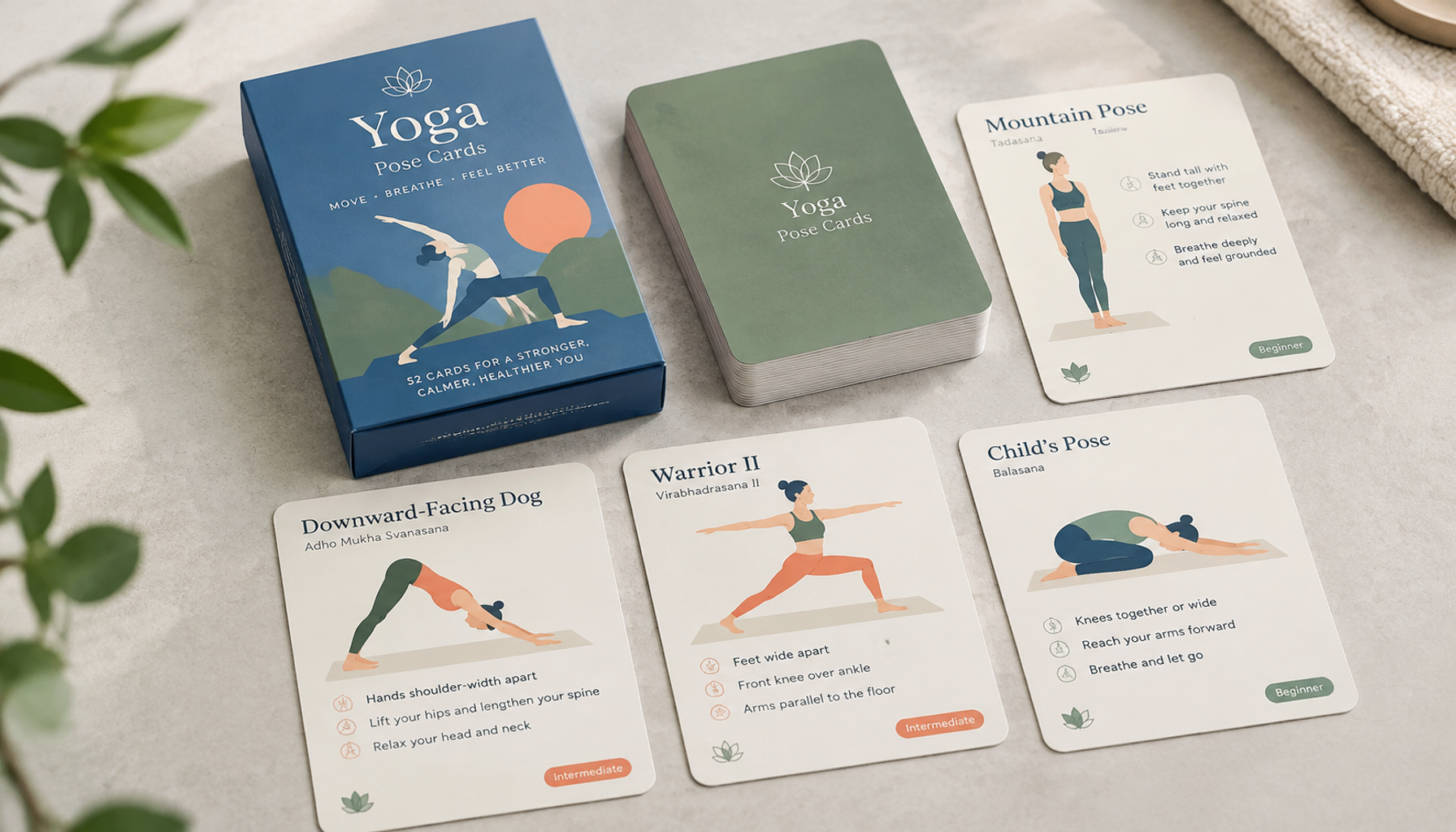
Custom Yoga Card Printing: A Practical Guide for Wellness Brands
Plan a yoga or exercise card deck around its real use: clear pose instructions, suitable card materials, comfortable corners, practical packaging, and a production process that checks artwork, samples, bulk output, and shipping requirements.
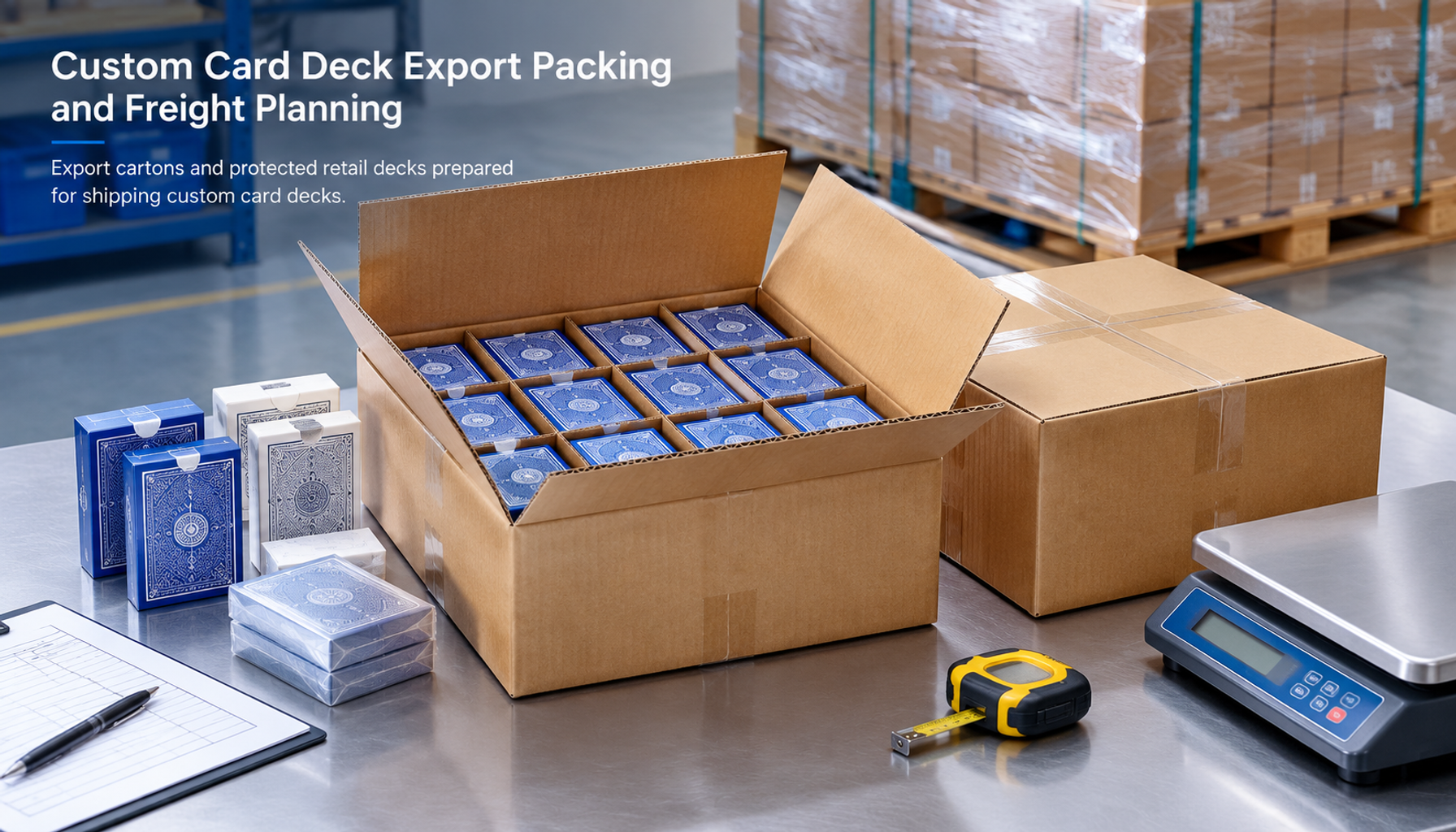
Shipping Custom Card Decks: Plan Cartons, Freight, and Landed Costs
Build a practical shipping plan for finished card decks: specify protective export cartons, calculate shipment volume, compare freight options, and clarify destination charges before booking.
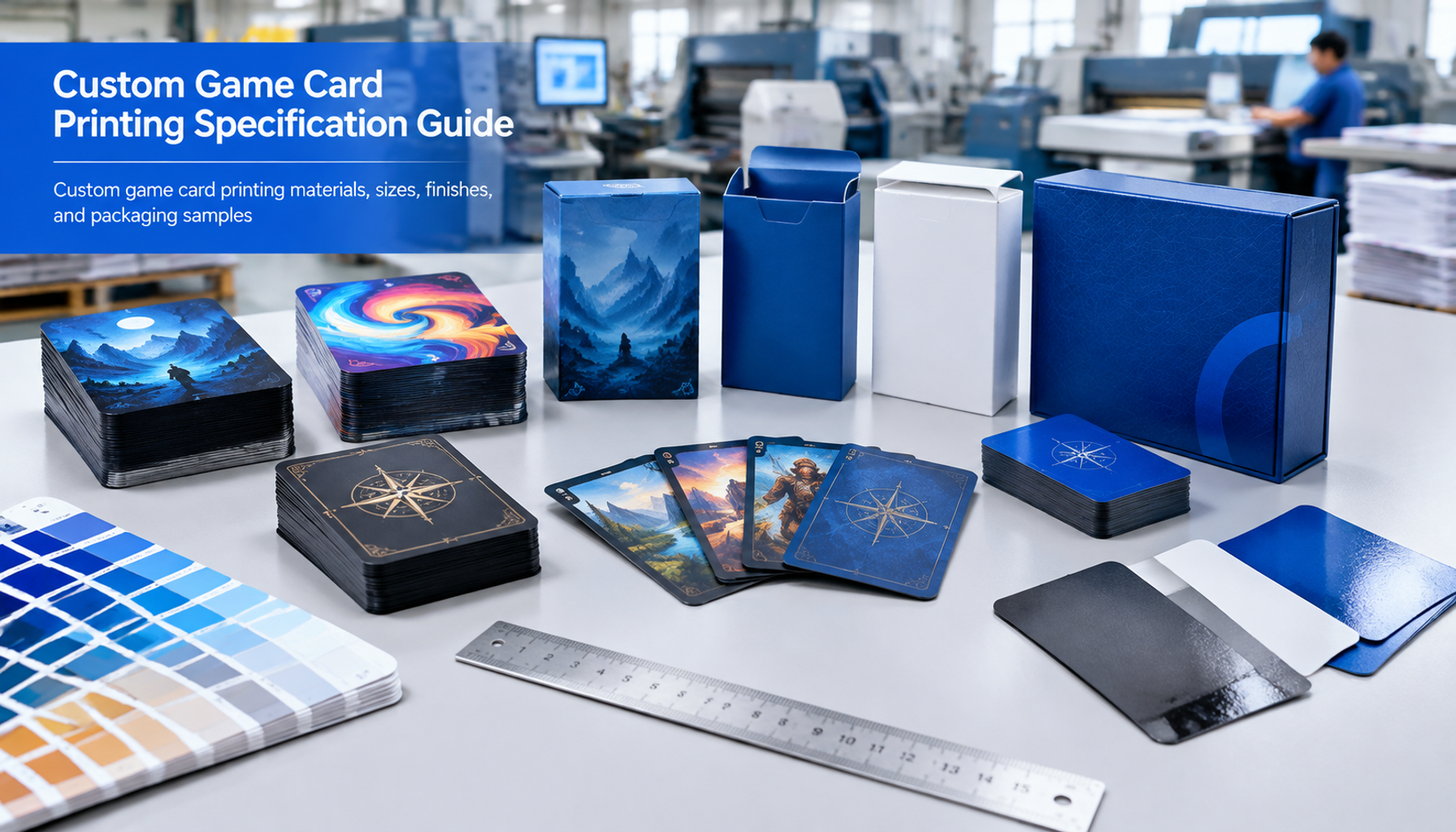
Custom Game Card Printing: A Buyer’s Specification Guide
A practical B2B guide to selecting game card stock, dimensions, surface finishes, packaging, samples, quality controls, and shipping arrangements.
Fast Quote Support
Ready to Start Your Custom Card Project?
Send us your product type, size, material, quantity, and packaging requirements. Our team will reply within 24 hours with production suggestions, sampling options, and a competitive quote. No setup fees.