
Sourcing Guides
Shipping Custom Cards from China: A B2B Planning Guide
Table of Contents
- Shipping Custom Cards from China: Start with the Delivery Plan
- Understand the Shipping Terms Before Comparing Quotes
- Connect Card and Packaging Specifications to Freight
- Compare Courier, Air Freight, and Sea Freight
- Specify Export Carton Packing and Inspection
- Calculate Landed Cost on a Consistent Basis
- Coordinate Sampling, Production, Documents, and Dispatch
- Key Takeaways for Buyers
- Frequently Asked Questions
- Conclusion: Confirm the Complete Delivery Scope
Plan your card shipment around packed dimensions, freight options, export protection, shipping terms, and destination charges. This guide explains how to connect factory production with a realistic delivery budget and receiving plan.
Shipping Custom Cards from China: Start with the Delivery Plan
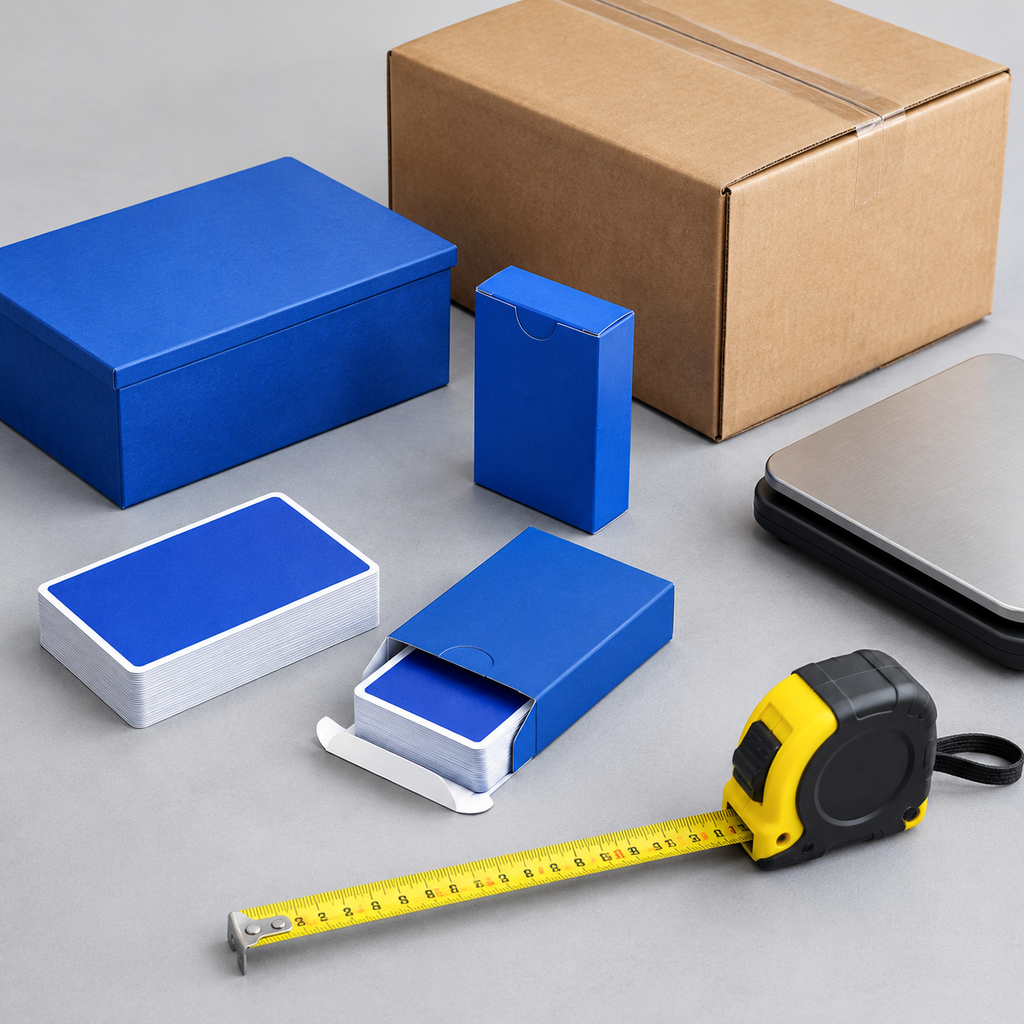
The best way to plan shipping custom cards from China is to confirm the delivery address, required arrival date, packed shipment size, and responsibility for customs before choosing a freight method. Compare complete delivery costs using the same shipment assumptions, then build the production schedule backward from your receiving deadline.
Cards can be dense, while presentation boxes add volume. A low factory unit price therefore does not establish the final cost per sellable deck. Your delivery plan must connect the card specification, retail packaging, export cartons, freight service, and destination receiving requirements.
YBJ Cards Printing is a China-based manufacturer with more than 20 years of experience supporting artwork review, sampling, bulk production, seven-stage quality control, export packing, and worldwide shipping. Specifications, MOQ, price, and lead time depend on project requirements; freight availability and destination procedures also affect the delivery plan.
Understand the Shipping Terms Before Comparing Quotes
Shipping terms describe responsibilities and cost boundaries; they do not, by themselves, promise a delivery date.
- Chargeable weight
- The weight used to calculate freight charges. Courier and air services commonly compare actual weight with volumetric weight, calculated from package dimensions using the provider’s applicable divisor and rules.
- CBM
- Cubic meters: a measure of shipment volume. For a rectangular carton, multiply its external length, width, and height in meters, then multiply by carton count.
- Landed cost
- The total cost of getting goods to an agreed destination, including applicable freight, handling, customs charges, duties, taxes, and delivery.
- Incoterms®
- International commercial rules allocating specified costs, tasks, and transfer of risk between seller and buyer. Write the chosen rule, named place or port, and version into the agreement.
For example, FCA can suit handover to a buyer-appointed carrier at a named place. FOB applies to sea or inland waterway transport; for containerized cargo handed over before loading aboard a vessel, discuss whether FCA better matches the actual handover. Under DAP, the buyer generally handles import clearance and import duties and taxes. Under DDP, these are generally the seller’s responsibility, subject to the agreed arrangement and local feasibility.
Risk transfer and payment of freight can occur at different points. Confirm cargo insurance separately rather than assuming every freight quotation includes suitable cover.
Connect Card and Packaging Specifications to Freight
Request preliminary packing data during product development, then update it after the packaging sample is approved. Card count, stock thickness, inserts, and box construction all affect shipping weight or volume.
| Product configuration | Freight consideration | Specification to confirm |
|---|---|---|
| Game or playing cards in tuck boxes | Compact packs can still become heavy in large cartons | Cards per deck, packed deck weight, decks per carton |
| Tarot or oracle decks in rigid boxes | Presentation packaging increases packed dimensions | External box size, inserts, abrasion protection |
| Flash cards with accessories | Rings, dividers, or other components affect packing | Complete set contents and assembly layout |
| Greeting cards with envelopes | Flatness and corner protection matter | Bundle size, envelope count, protective support |
| PVC membership cards | Dense stacks need suitable carton loading | Bundle weight, surface protection, carton weight limit |
Use the card thickness and core selection guide to clarify material specifications. Compare custom card packaging options before freezing the retail box dimensions.
These are planning considerations, not fixed packing specifications. Confirm the complete sellable unit before accepting a freight estimate.
Compare Courier, Air Freight, and Sea Freight
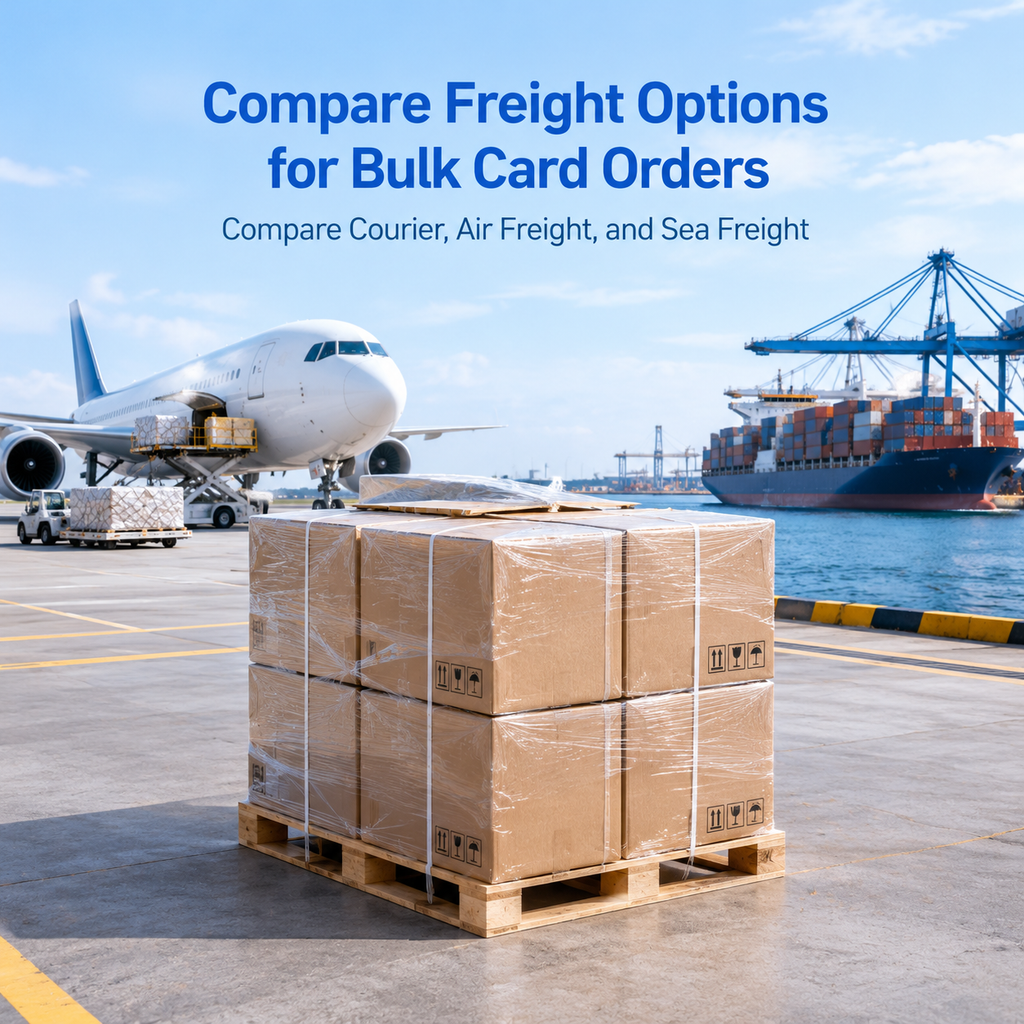
Choose card deck freight according to shipment size, deadline, destination access, and total charges. No method is automatically cheapest for every order.
| Method | Typical planning fit | Main trade-off | Check before booking |
|---|---|---|---|
| Express courier | Samples, small shipments, urgent replenishment | Convenient parcel delivery with potentially high chargeable-weight costs | Size limits, surcharges, clearance fees, tax treatment |
| Air freight | Time-sensitive bulk orders | Shorter main transit than sea, with separate handling and delivery costs possible | Airport handling, broker fees, chargeable weight, final delivery |
| Sea freight, LCL | Orders sharing container space | Lower-volume access to ocean transport, with consolidation and minimum charges | Origin and destination handling, routing, collection arrangements |
| Sea freight, FCL | Volumes that justify a dedicated container | Container commitment and unloading requirements | Container utilization, delivery appointment, free time, unloading resources |
LCL means less than container load; FCL means full container load. Compare their complete costs because destination minimum charges can change the result for smaller ocean shipments.
A split shipment may suit a launch: send an initial quantity by air and the balance by sea. Ask for two packing lists, separate freight costs, and any additional handling charges. Evaluate delivery to the actual warehouse, including customs and receiving appointments, rather than comparing airport-to-airport or port-to-port transit alone.
Specify Export Carton Packing and Inspection
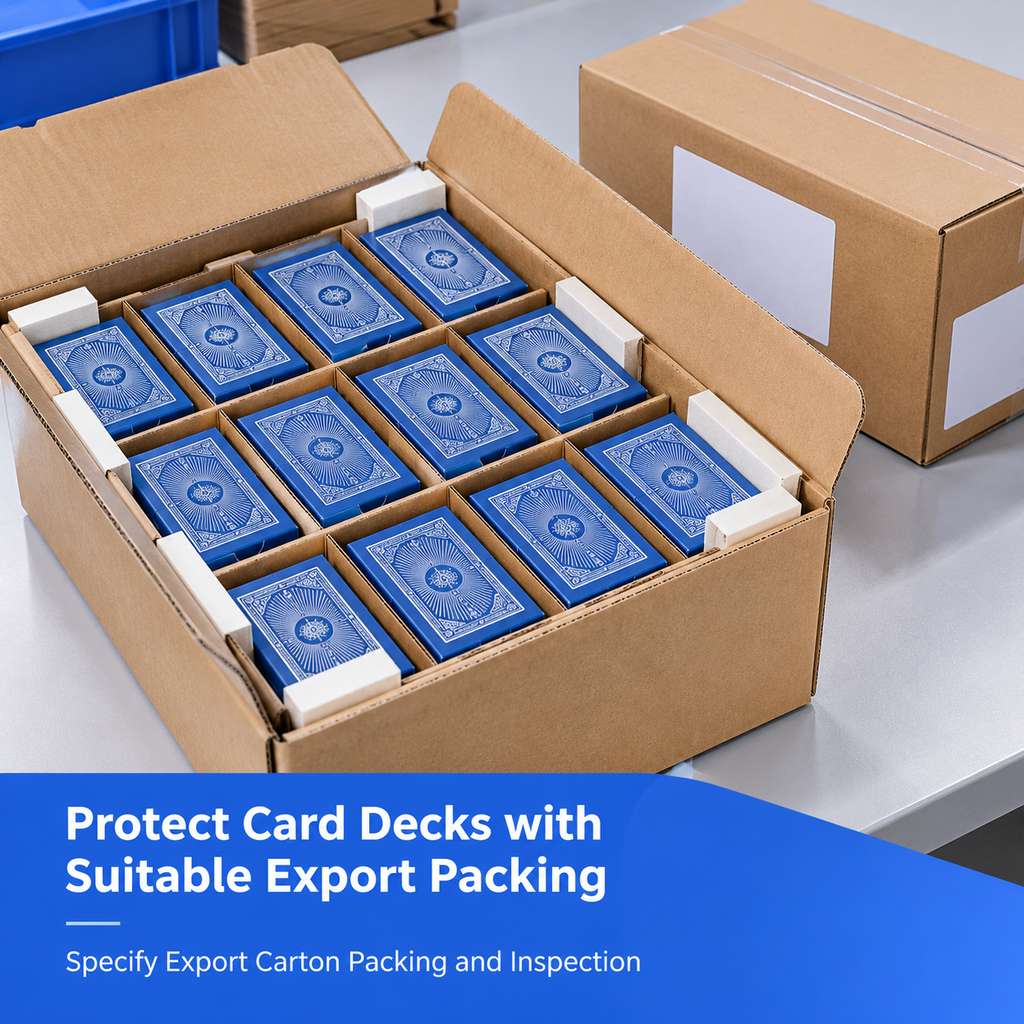
Export carton packing should protect the retail unit through handling, stacking, and the expected transport environment. A presentation box alone is not a complete shipping specification.
- Carton construction: agree suitable board strength, dimensions, closure, and a handling weight limit with the factory and forwarder.
- Internal protection: specify dividers, cushioning, or supports where needed to prevent movement and crushed corners.
- Moisture management: assess liners and desiccants for the route and materials; they do not replace dry goods and sound cartons.
- Shipment identification: show agreed SKU, quantity, carton sequence, destination marks, and handling information.
- Pallet requirements: confirm footprint, loaded height, overhang restrictions, and warehouse rules. If regulated solid-wood packaging is used, verify applicable treatment and marking requirements.
Before release, request checks covering deck completeness, appearance, finish, box fit, carton count, labels, and packing consistency. Ask for packing photographs and agreed inspection records. Agree any drop or compression testing before production, including the method and acceptance criteria.
For multi-component decks, the game card specification guide helps connect component requirements with assembly and quality checks.
Calculate Landed Cost on a Consistent Basis
Compare freight quotations only after matching their inclusions, destination, packing assumptions, and validity period. A low transport line can exclude substantial arrival charges.
Planning formula: landed cost = goods + export packing + origin charges + freight + insurance + destination handling + customs brokerage + applicable duties and taxes + final delivery. Avoid counting charges twice when they are already included in the supplier’s price.
Divide the total by sellable units to estimate cost per deck. Ask your accountant how recoverable import taxes should be treated in margin calculations; cash required at import can differ from the final accounting cost.
- Request carton count, external dimensions, gross weight, total CBM, and pallet details.
- Identify the importer of record and confirm customs classification with a qualified broker.
- List exclusions such as examinations, storage, redelivery, demurrage, or detention.
- Check quote currency, validity, surcharges, and insurance scope.
For shipping custom cards from China, changes to rigid box dimensions or carton loading can alter the freight estimate. Reconfirm costs after final packing data is available.
Coordinate Sampling, Production, Documents, and Dispatch
Build a single schedule covering sample approval through warehouse receipt. A factory completion date is only one milestone.
- Define the order: confirm card size, count, stock, finish, packaging, quantity, destination, and required receipt date. MOQ depends on construction and production requirements.
- Approve samples: check artwork and physical construction. A digital proof cannot establish packed weight or box fit; confirm what the physical sample represents and any sampling charges.
- Approve bulk production: record the specification and quality criteria. For tarot-format projects, review tarot deck production specifications before approval.
- Prepare booking data: provide estimated cargo readiness and packing figures, then confirm final quantities and measurements before dispatch.
- Review documents: reconcile the commercial invoice and packing list with the order, consignee, quantities, values, origin, and shipping marks. The applicable air waybill, bill of lading, or courier record must match the shipment. Confirm any additional destination documents with the broker.
- Release and receive: complete agreed inspection and payment steps, record dispatch details, track clearance, and arrange unloading. Inspect cartons on arrival and document damage promptly under the carrier’s and insurer’s procedures.
Allow separately for sample revisions, production, inspection, booking, transit, customs, and receiving. Ask which estimates are confirmed and which remain provisional.
Key Takeaways for Buyers
- Base freight comparisons on packed dimensions and gross weight.
- Confirm shipping terms, named location, importer responsibility, and insurance.
- Approve export protection alongside retail packaging.
- Budget destination charges and delivery to the receiving warehouse.
- Plan from required receipt backward through customs, freight, inspection, production, and sampling.
Frequently Asked Questions
What is the cheapest way to ship custom cards from China?
It depends on packed size, weight, route, and destination charges. Compare complete courier, air, and sea quotations; ocean minimum charges can make small shipments less economical than expected.
How long does shipping take?
Lead time depends on service, routing, booking availability, clearance, and final delivery. Request a route-specific estimate and separate factory production time from transport time.
What information is needed for a freight quote?
Provide the destination postcode, cargo-ready date, carton count, external dimensions, gross weight, pallet details, goods description, and requested shipping terms. Mark preliminary packing figures as estimates.
Does DDP include every possible charge?
DDP generally assigns import clearance, duties, and taxes to the seller. Confirm the named destination, importer arrangement, unloading responsibilities, exclusions, and local feasibility in writing.
Can one production order ship to multiple warehouses?
A split delivery can be planned, subject to project requirements. Confirm quantities, labels, documents, packaging, and freight for each destination. Multiple shipments can add handling and clearance costs.
Conclusion: Confirm the Complete Delivery Scope
Successful shipping custom cards from China starts with a confirmed product specification and ends with a workable receiving plan. Match freight to packed cargo, document responsibilities, and compare landed cost before approving dispatch. Final specifications, MOQ, price, and lead time depend on your project requirements.
FAQ
What is the cheapest way to ship custom cards from China?
It depends on packed size, weight, route, and destination charges. Compare complete courier, air, and sea quotations; ocean minimum charges can make small shipments less economical than expected.
How long does shipping take?
Lead time depends on service, routing, booking availability, clearance, and final delivery. Request a route-specific estimate and separate factory production time from transport time.
What information is needed for a freight quote?
Provide the destination postcode, cargo-ready date, carton count, external dimensions, gross weight, pallet details, goods description, and requested shipping terms. Mark preliminary packing figures as estimates.
Does DDP include every possible charge?
DDP generally assigns import clearance, duties, and taxes to the seller. Confirm the named destination, importer arrangement, unloading responsibilities, exclusions, and local feasibility in writing.
Can one production order ship to multiple warehouses?
A split delivery can be planned, subject to project requirements. Confirm quantities, labels, documents, packaging, and freight for each destination. Multiple shipments can add handling and clearance costs.
Ready to Start Your Custom Card Project?
Send us your card type, size, material, quantity, finish, and packaging requirements, along with your delivery destination and target receipt date. Our factory team will recommend suitable production and sampling options and prepare a tailored quote with a shipping scope for your review.
Keep Reading
Related Articles
Custom Card Printing Cost: How to Compare Factory Quotes
Compare card printing quotations using the same deck specifications, packaging, quality requirements, and shipping scope. Learn how to separate unit prices, setup charges, and landed costs before choosing a factory.
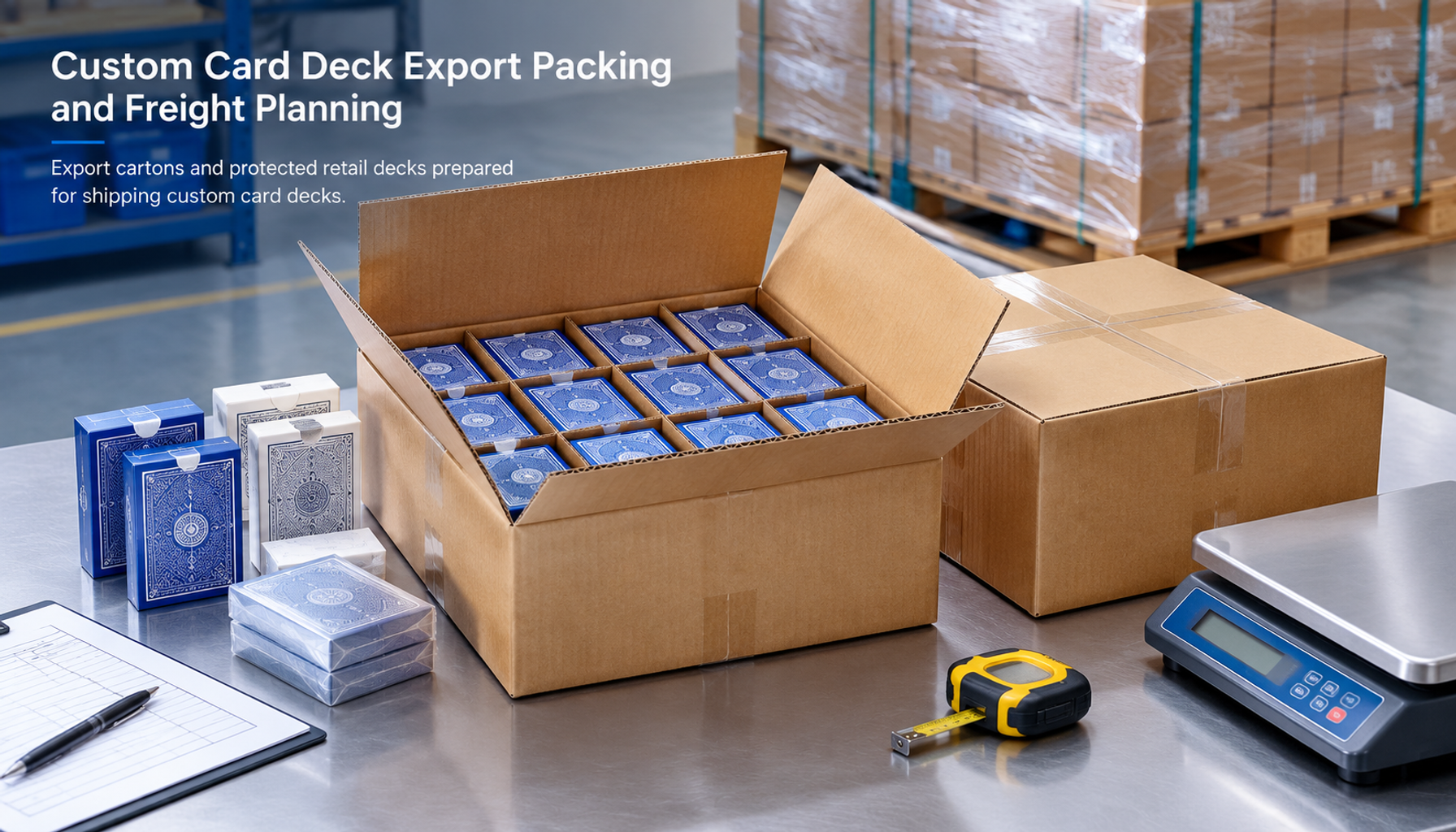
Shipping Custom Card Decks: Plan Cartons, Freight, and Landed Costs
Build a practical shipping plan for finished card decks: specify protective export cartons, calculate shipment volume, compare freight options, and clarify destination charges before booking.

Card Printing Quality Control: A Bulk Order Checklist
Use this practical bulk-order checklist to define acceptance criteria, inspect printed cards and complete decks, and document packaging and pre-shipment checks.
Fast Quote Support
Ready to Start Your Custom Card Project?
Send us your product type, size, material, quantity, and packaging requirements. Our team will reply within 24 hours with production suggestions, sampling options, and a competitive quote. No setup fees.